

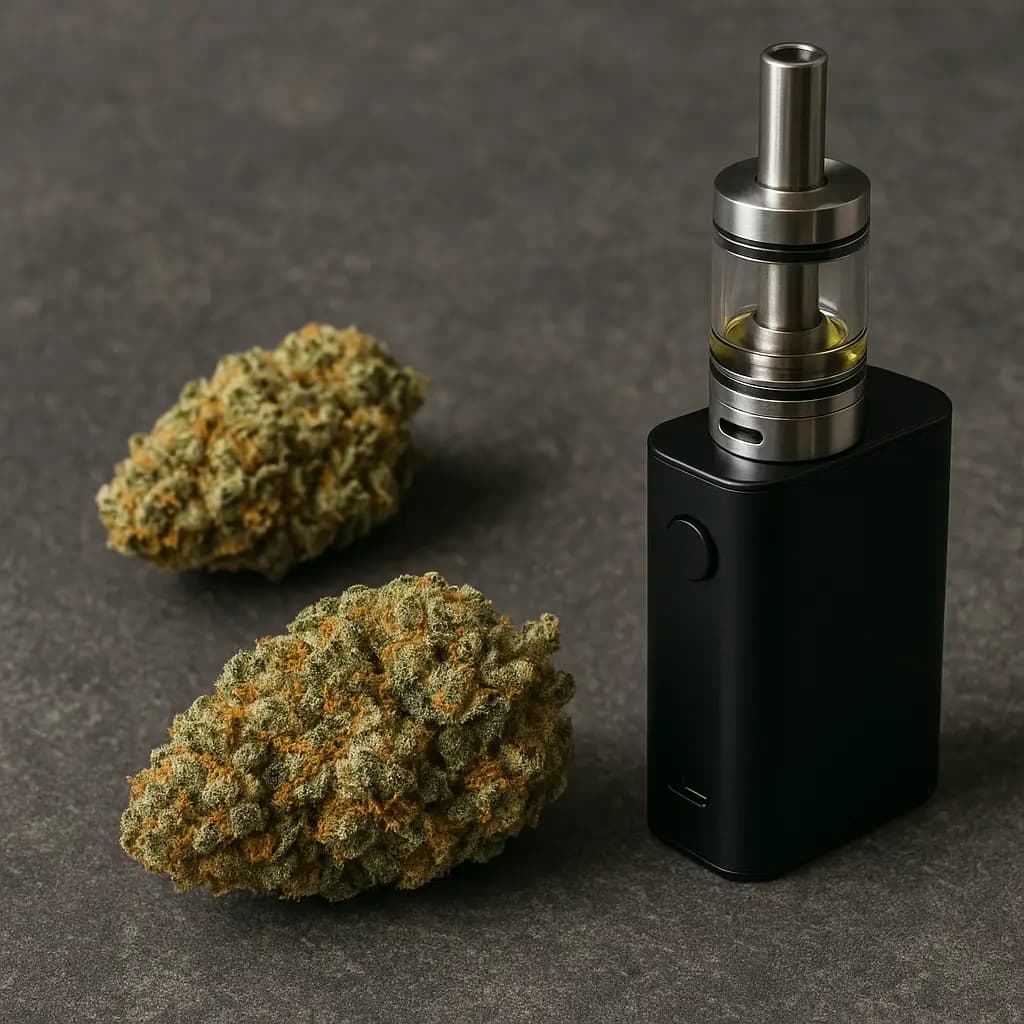
Smoking was the default for a long time. Pack a bowl, roll a joint, spark it up. But as more people approach cannabis as part of a wellness routine rather than pure recreation, dry herb vaporizers have gained real ground. A vaporizer heats flower just below the point of combustion, releasing cannabinoids and terpenes as vapor without setting anything on fire. That single difference, no flame, drives most of the benefits below. Here are seven reasons people make the switch, with the science behind each.
1. Cleaner for Your Lungs
The headline benefit is what you are not inhaling. When you burn cannabis, you take in tar, ash, carbon monoxide, and other combustion byproducts alongside the cannabinoids. A clinical trial at San Francisco General Hospital found the Volcano vaporizer delivered efficient doses of THC while significantly reducing intake of gaseous combustion toxins, including carbon monoxide (NORML, citing Journal of Clinical Pharmacology, 2007).
Because vaporizing heats rather than burns, it skips the soot and many of the irritants your lungs do not need. If you have ever felt your throat burn or coughed after a heavy session, that is the combustion talking. Vapor is gentler, and survey research backs up what users report.
2. Way Better Flavor
This is the benefit that surprises people most. Terpenes, the aromatic oils responsible for cannabis flavor and smell, are delicate. Many begin evaporating at low temperatures: caryophyllene near 130 degrees C, myrcene around 168 degrees C, and linalool around 198 degrees C (Veriheal, cannabinoid and terpene boiling points, 2024).
Fire torches most of that profile before it ever reaches you. A vaporizer set in the typical 175 to 220 degrees C range preserves far more of the terpene spectrum, so you actually taste the citrus, pine, or earthiness of a given strain. With organic THCA flower grown without synthetic chemicals, that clean flavor comes through clearly. It is less about getting higher and more about tasting what you are consuming.
3. More Control Over Cannabinoids
Different compounds release at different temperatures, which means a dial gives you real control over your experience. THC begins vaporizing around 157 degrees C, while several minor cannabinoids and heavier terpenes need temperatures closer to 200 to 220 degrees C (Project CBD, vaporization boiling points, 2024).
A practical way to think about the working range:
- Low (175 to 185 degrees C): lighter, terpene-forward, more functional for daytime
- Medium (185 to 205 degrees C): a balanced session across flavor and effect
- High (205 to 220 degrees C): fuller extraction of THC, CBD, and CBN, heavier feel
Want something mellow before a task, or something heavier before bed? You can tune for it. A lighter or torch gives you exactly one setting: as hot as possible.
4. You Use Less Flower
Vaporizing is more efficient with your stash. Combustion instantly destroys a chunk of your cannabinoids, some before you even inhale. Vaporization extracts more evenly and thoroughly, so the same amount of flower tends to go further. One frequently cited lab analysis found that vaporizing at around 200 degrees C extracted an average of 54% of available THC in a single session, with delivery directed into vapor rather than lost to a burning cherry (California NORML, citing Pomahacova et al., Inhalation Toxicology, 2009).
There is a bonus, too. The leftover material, often called AVB (already vaped bud), still contains cannabinoids and can be repurposed in edibles, capsules, or tea. It will not taste like fresh flower, but the activated cannabinoids are still there. With premium organic flower, getting more out of every gram genuinely matters.
5. Less Smell, More Discretion
Cannabis smoke is not subtle. It clings to clothes, furniture, upholstery, and hair, and it announces itself across a room. Vapor is far lighter. It produces a quick-fading herbal aroma rather than a heavy, lingering smoke smell, and it does not saturate fabric the same way.
For apartment dwellers, travelers, or anyone who values privacy, that is a meaningful quality-of-life difference. Your space stays closer to neutral, and your session does not become everyone else's business.
6. More Consistent Effects
Smoking can be unpredictable. With the same strain, your experience can swing based on how hot the bowl burns, how fast you inhale, or how evenly it is packed. One hit lands hard, the next barely registers. A vaporizer heats flower evenly at a set temperature, which makes results far more repeatable session to session.
That predictability is valuable for anyone using cannabis with intention, whether for sleep, calm, or recovery support. A consistent dose feels less like a gamble and more like a tool you can actually rely on. Note that these are wellness uses, not medical treatment claims.
7. A Smarter Choice for Daily Use
If you consume often, the advantages compound. Same cannabinoids, more flavor, less flower used, and far fewer combustion byproducts reaching your lungs over time. Lab testing reported that the Volcano vaporizer at roughly 210 degrees C released about 95% fewer harmful by-products than the smoke from a combusted joint (Alchimia, citing Lanz et al., 2016).
You do not have to retire your glass or give up joints entirely. Even rotating a dry herb vape into part of your routine can lighten the long-term load. And if you are working with cryo-cured, terpene-rich organic THCA flower grown in living soil, a vaporizer lets you taste and feel the craft that went into it, rather than burning it away.
The contrast between the two methods is easiest to see side by side.
| Factor | Combustion (Smoking) | Dry Herb Vaporizing |
|---|---|---|
| Process | Burns flower with a flame | Heats below combustion |
| Combustion toxins | Tar, soot, carbon monoxide | Sharply reduced |
| Terpene flavor | Mostly destroyed by fire | Largely preserved |
| Temperature control | None | Adjustable by degree |
| Flower efficiency | Burns off potency | More even extraction |
| Smell | Strong and lingering | Lighter, fades fast |
Final Thoughts
There is no single right way to enjoy cannabis. But if you care about flavor, efficiency, and how your body feels over time, vaporizing flower is worth trying. It is smoother, it preserves more of the plant, and it lets you actually experience the difference between strains.
One honest caveat: vaping is lower-risk than smoking, not no-risk. A 2025 study from the Research Institute of the McGill University Health Centre found that cannabis vapor still exposes lung cells to carcinogenic and respiratory toxicants and can trigger cellular stress (McGill University Health Centre, 2025). Inhaling anything carries some risk. The fairest framing is harm reduction: for people who already consume flower, vaporizing meaningfully cuts combustion byproducts. Especially with high-quality, terpene-rich THCA flower, it can unlock a cleaner, more flavorful experience while being easier on your lungs than a flame ever will be.
Is vaping dry herb actually healthier than smoking?
It avoids combustion, so it skips tar, soot, and carbon monoxide. A San Francisco General Hospital trial found the Volcano cut gaseous combustion toxins while delivering THC. But a 2025 McGill study found vapor still exposes lung cells to toxicants, so it is lower-risk, not risk-free.
What temperature should I vape cannabis flower at?
The common working range is about 175 to 220 degrees C. Lower temperatures (175 to 185) favor terpenes and lighter effects; higher temperatures (205 to 220) extract more THC, CBD, and CBN for a heavier feel. THC begins vaporizing near 157 degrees C (Project CBD, 2024).
Does vaping use less flower than smoking?
Generally yes. Combustion destroys cannabinoids instantly, while vaporizing extracts more evenly. Lab analysis found vaporizing near 200 degrees C extracted about 54% of available THC per session (Pomahacova et al., Inhalation Toxicology, 2009), and leftover AVB can still be reused.
Does vaping flower preserve more flavor?
Yes. Terpenes are delicate and many evaporate at low temperatures, such as caryophyllene near 130 degrees C and myrcene near 168 degrees C. Fire burns most of them off, while a vaporizer in the 175 to 220 degrees C range keeps far more of the strain’s flavor intact.
Can you vape THCA flower?
Yes. Heating THCA flower in a dry herb vaporizer converts THCA to THC and releases terpenes without combustion. Many users prefer it specifically for clean, terpene-forward flavor, which comes through best with organic flower grown without synthetic chemicals.
Found this useful? Share it.
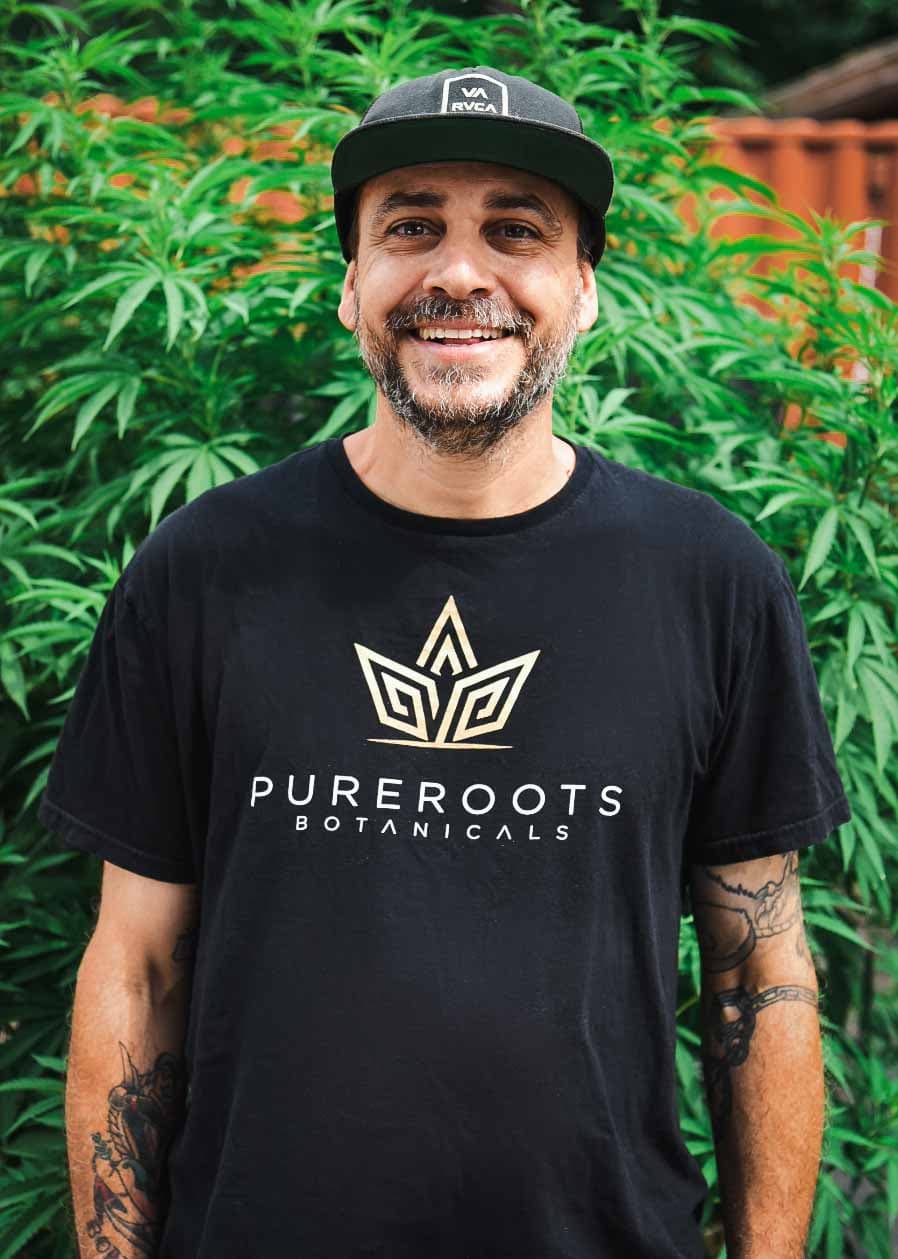
Written by
Ben Cerullo
Founder & Master Grower · Pure Roots Botanicals
Ben Cerullo founded Pure Roots Botanicals after years in organic agriculture, driven by a belief that hemp consumers deserve federal-grade transparency. He manages USDA Certified Organic operations at the North Carolina farm (NOP ID: 5561006795) and writes on hemp education, organic certification, and consumer safety.