


Live rosin gummies are premium cannabis edibles made with solventless extract from fresh-frozen hemp flower. They skip the chemical solvents used in most extraction methods, preserving a complete profile of cannabinoids, terpenes, and other plant compounds in the final gummy. The cannabis edibles market reached roughly $14.8 billion in 2025 and is growing at about 13.4% a year (Global Market Insights, 2025). So what actually separates these from the gummies already filling dispensary shelves?
What Makes Live Rosin Gummies Different From Regular Edibles?
The difference is what is left in versus stripped out. Most cannabis gummies are infused with distillate, a refined extract that typically contains 85 to 95% of a single isolated cannabinoid, usually delta-9 THC, with nearly everything else removed during refinement. The terpenes are gone. The minor cannabinoids are gone. You get potent, isolated THC and little of the plant itself.
Live rosin works from the opposite direction. It starts with fresh-frozen cannabis, plants harvested at peak ripeness and frozen immediately to lock in the living terpene profile. That material is agitated in ice water to separate the trichomes, then pressed under low heat and controlled pressure into a full-spectrum oil. No ethanol, no butane, no hydrocarbon solvent at any point. For the full method, see our guide to what live rosin is.
How Are Live Rosin Gummies Made?
Live rosin gummies are made in four stages, and each one directly shapes what ends up in your gummy. Skip or rush any stage and the final product loses the very thing that makes it worth buying.
Fresh-Freeze
Immediately after harvest, the whole plant goes into cold storage. Standard drying and curing degrades terpenes, the compounds most responsible for flavor and aroma. Fresh-freezing halts that degradation before it can begin, preserving the living profile of the strain.
Ice Water Extraction
The frozen material is agitated in ice-cold water through a series of filter screens. Cold temperature and gentle motion knock the trichomes loose. They sink through progressively finer screens and collect as bubble hash, a solventless concentrate at the trichome level of the original plant.
Rosin Press
That bubble hash is pressed between sheets of parchment under low heat, typically 140 to 180°F, and controlled pressure. The rosin that emerges is a golden, full-spectrum oil. No chemical was involved at any stage. See our guide to decarboxylation for more on the heat science.
Decarb and Infusion
The rosin is gently decarboxylated, converting inactive THCA into delta-9 THC through controlled heat, then blended into the gummy base. A well-made live rosin gummy carries the flavor and effect profile of the original strain into every piece.
Personal Experience
At Pure Roots, this entire process, from planting to pressing, happens on our USDA Certified Organic farm in North Carolina. The rosin in our gummies comes from plants we grow ourselves, so we control every variable from soil composition to pressing temperature. A brand that sources from third-party farms simply cannot say that. Note that the gummies themselves are not USDA Organic; they are made with USDA Certified Organic live rosin.
What Effects Can You Expect? (Onset, Duration, and Dosing)
Live rosin gummies tend to produce fuller, longer-lasting effects than most distillate gummies, with a gradual onset that surprises many first-timers. Onset typically lands between 30 and 90 minutes, effects peak around 2 to 3 hours, and they last 4 to 8 hours depending on metabolism, tolerance, and recent food.
Here is the biology. When you eat an edible, your digestive system processes it before it reaches your bloodstream. Your liver converts delta-9 THC into 11-hydroxy-THC, a metabolite that crosses the blood-brain barrier readily and produces a stronger, longer effect than inhaled THC. That is why edibles feel different from smoking even at the same milligram count, and why patience with dosing matters so much.
| Experience Level | Starting Dose | What to Expect |
|---|---|---|
| First-time / very low tolerance | 2.5 mg | Mild relaxation, gentle mood lift |
| Occasional user | 5–10 mg | Noticeable relaxation, some euphoria |
| Regular user | 10–25 mg | Stronger body effect, longer duration |
| High tolerance | 25 mg+ | Potent; approach with prior experience |
What Is the Entourage Effect, and Why Does It Matter?
The entourage effectdescribes how cannabis compounds interact and modify each other's effects. Cannabinoids and terpenes do not just coexist; research suggests they work as a system. Some terpenes appear to change how THC binds to receptors, and others seem to soften anxiety or shift duration.
In April 2024, a Johns Hopkins Medicine double-blind, placebo-controlled trial provided some of the first clinical evidence. Across 20 healthy adults, pairing 30 mg of vaporized THC with 15 mg of D-limonene significantly reduced self-reported anxiety and paranoia compared with THC alone, while THC's other effects stayed intact (Johns Hopkins Medicine, 2024). It is one of the clearest demonstrations to date of a direct terpene-cannabinoid interaction.
The mechanism is real, but the full picture is still being mapped. Large-scale standardized trials of cannabinoid-terpene synergy remain limited. What is clear is the contrast in design: distillate gummies give you isolated THC, one player with no supporting cast, while live rosin gummies preserve what was naturally in the plant. That is why experienced users consistently describe the effect as rounder, more consistent, and more true-to-strain.
Why Does Organic Matter Specifically for Live Rosin?
Solventless extraction does not clean the plant. Whatever was on that flower, synthetic pesticides, heavy metals absorbed from soil, banned fungicide residues, concentrates into the extract alongside the cannabinoids and terpenes. There is no solvent wash to leave contaminants behind, so the only safeguard is clean starting material.
Think of it this way: a more potent concentrate means more of everything in the plant, including any inputs used during cultivation. For live rosin specifically, starting-material quality matters more than in any other extraction method, because there is no secondary purification step to fall back on.
USDA Organic certification prohibits synthetic pesticides, synthetic fertilizers, and GMO inputs, and requires a 36-month transition period before a farm can certify (USDA AMS). For a solventless extract like live rosin, organic starting material is a baseline quality requirement, not an optional premium. "Organically grown" or "pesticide-free" claims without a USDA seal are self-reported and unverified; the seal means an accredited certifying agent audited the farm and all inputs. You can verify our certification directly in the USDA Organic Integrity Database.
Are Hemp-Derived Live Rosin Delta-9 Gummies Legal?
Yes, in most of the United States. Under the 2018 Farm Bill, hemp-derived products containing 0.3% or less delta-9 THC by dry weight are federally legal, and hemp-derived live rosin delta-9 gummies fall within that definition (Congress.gov).
Individual states set their own rules, and several restrict hemp-derived THC products beyond the federal baseline. The 0.3% limit applies to the gummy's total dry weight, not just the extract, so a 5-gram gummy can legally contain up to about 15 mg of delta-9 THC. Always check your state's current regulations before ordering; the National Conference of State Legislatures tracks state cannabis and hemp legislation with regular updates. This landscape is shifting as Farm Bill reauthorization adds federal complexity.
How Do You Choose a Quality Live Rosin Gummy?
Not every product with "live rosin" on the label is made the same way. Before buying, check four things that separate a genuine premium gummy from a marketing claim.
- COA (Certificate of Analysis): A legitimate product has a current third-party lab test showing the full cannabinoid panel plus a pesticide and residual-solvent screen. Delta-9 should be within legal limits; pesticides should read non-detect.
- "Live" rosin vs. just rosin: Plain rosin can be pressed from dried, cured flower and still be called rosin. Live rosin specifically means fresh-frozen starting material. If the label avoids the word "live," it may not be the premium version.
- Organic certification: "Organically grown" without a USDA seal is not third-party verified. The seal means a certifying agent audited the farm, not just the brand's word.
- Delta-9 content per gummy: Reputable brands state the milligrams clearly. If the dose is not on the label, treat that as a red flag.
Want a line you can verify end to end? Browse our live rosin delta-9 gummies →
Frequently Asked Questions
What is the difference between live rosin gummies and regular gummies?
Regular gummies are almost always made with THC distillate, a refined extract that strips out terpenes and minor cannabinoids, leaving 85–95% isolated THC. Live rosin gummies use solventless concentrate from fresh-frozen cannabis, preserving the complete cannabinoid and terpene profile. The experience tends to feel more well-rounded and strain-accurate.
How long do live rosin gummies take to kick in?
Most people feel effects between 30 and 90 minutes after eating one. Metabolism, body weight, tolerance, and recent food all affect onset. Wait the full 90 minutes before considering a second dose, since early redosing is the most common reason for an uncomfortable first edible experience.
Are live rosin gummies stronger than regular edibles?
Not necessarily in raw THC percentage, but many users report the effect feels more complete: smoother, more well-rounded, and with better flavor. That is largely attributed to the preserved terpenes and minor cannabinoids working alongside the THC, an effect supported by a 2024 Johns Hopkins trial on limonene and THC.
What dose should a beginner start with?
Start at 2.5–5 mg of delta-9 THC and wait 90 minutes before re-evaluating. Most experienced users consider 10 mg a moderate dose, and 25 mg or above is high. Edibles affect everyone differently, so start low and go slow.
What is the difference between live rosin and live resin?
Live rosin is solventless, made with heat and pressure only. Live resin uses hydrocarbon solvents like butane to extract from fresh-frozen material. Both preserve terpenes better than dried-flower extractions; the solventless distinction is what separates them. See our full live rosin vs. live resin breakdown.
Do live rosin gummies need to be refrigerated?
Most commercial live rosin gummies are shelf-stable at room temperature. Keep them away from direct heat and sunlight. If a product is especially fresh-pressed or made without preservatives, the manufacturer will indicate refrigeration on the label.
What makes USDA Organic live rosin gummies different?
USDA Organic certification of the source hemp guarantees no synthetic pesticides, synthetic fertilizers, or GMO inputs in cultivation, verified by a third-party certifying agent rather than a self-reported claim. Because solventless extraction concentrates everything in the plant, organic starting material matters more here than in any other method. The gummy itself is made with that organic live rosin.
Found this useful? Share it.
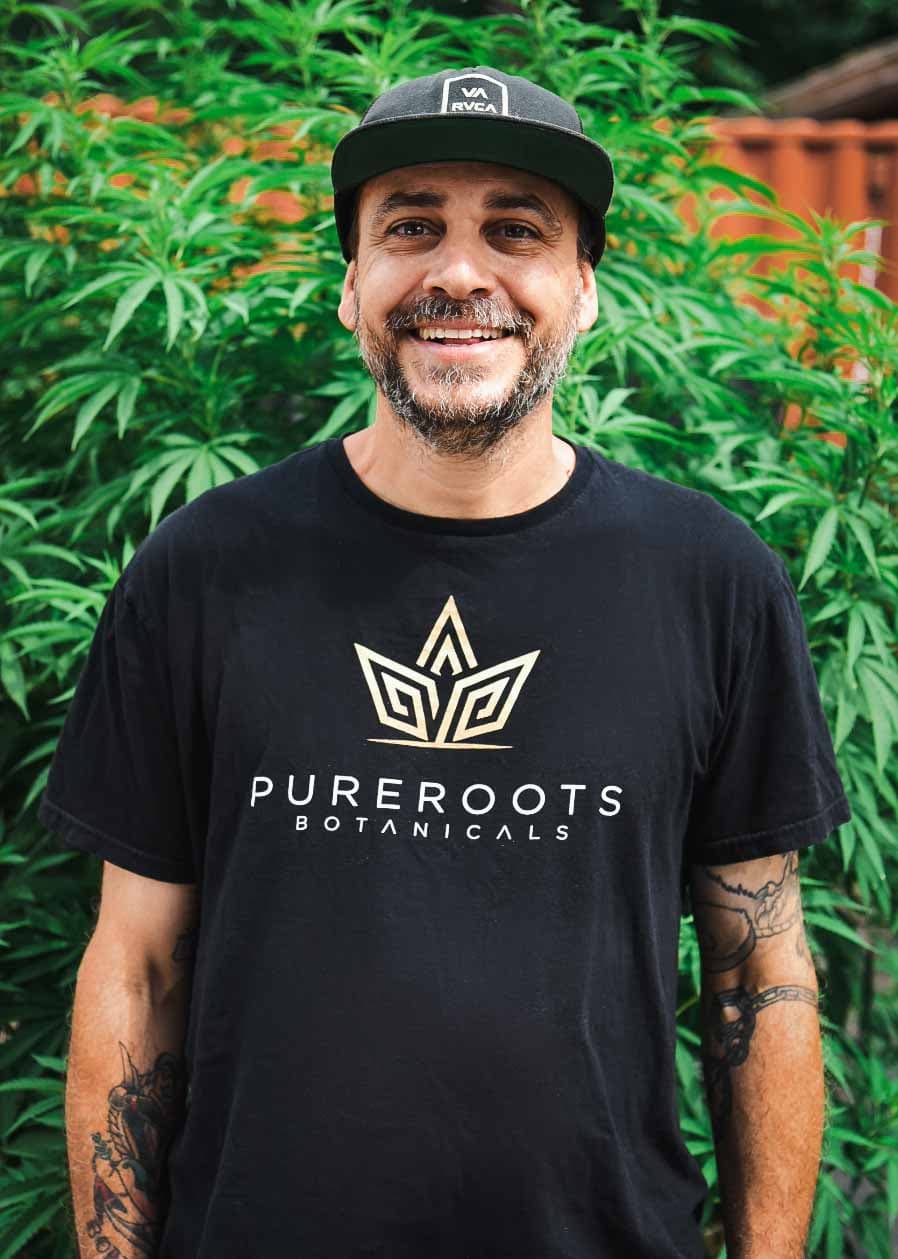
Written by
Ben Cerullo
Founder & Master Grower · Pure Roots Botanicals
Ben Cerullo founded Pure Roots Botanicals after years in organic agriculture, driven by a belief that hemp consumers deserve federal-grade transparency. He manages USDA Certified Organic operations at the North Carolina farm (NOP ID: 5561006795) and writes on hemp education, organic certification, and consumer safety.