

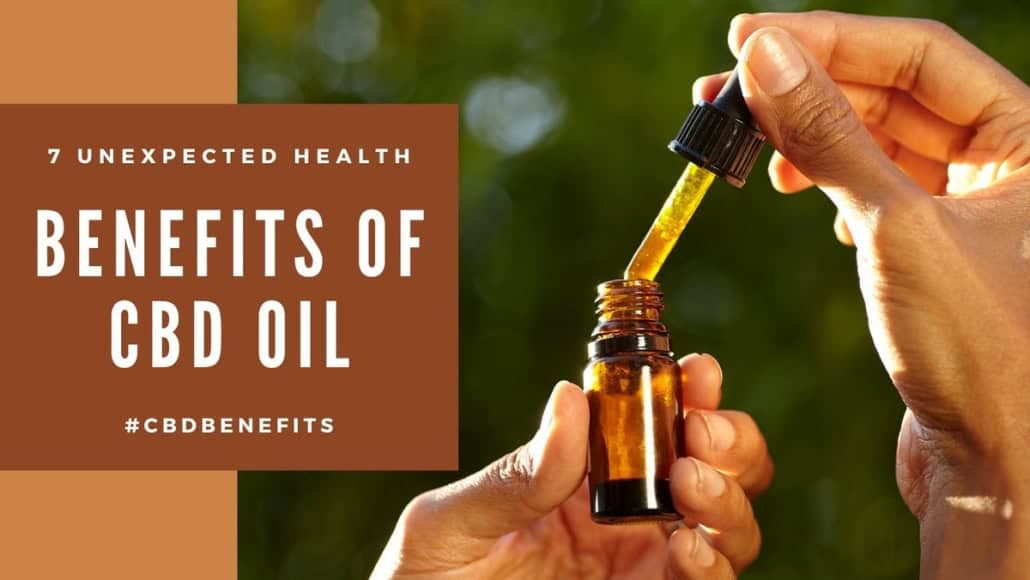
Cannabidiol, better known as CBD, is one of more than 100 chemical compounds called cannabinoids found in Cannabis sativa. Unlike THC, CBD is non-intoxicating, which is a large part of why it has drawn so much interest from people who want plant-based options without feeling high. Below are seven potential benefits that have been examined in published research, alongside an honest look at how strong that evidence actually is. CBD oil is a wellness product, not a medicine, and nothing here is a treatment claim.
Why the caution? Because the science is genuinely promising in places and genuinely thin in others. The honest answer to "what can CBD do?" is "it depends what study you read." Here is what the research shows, benefit by benefit.
1. Pain Relief
Pain is the most common reason people try CBD, and the mechanism is plausible. The endocannabinoid system (ECS) helps regulate functions like sleep, appetite, immune response, and pain. CBD appears to influence endocannabinoid receptor activity and interact with neurotransmitters that carry pain signals, which is the basis for ongoing study.
Much of the early evidence came from animal studies, where CBD reduced inflammation and nerve pain. Human evidence is building but mixed. A large pragmatic randomized trial of 468 U.S. veterans is comparing a CBD oral solution against placebo on pain severity and interference precisely because the existing human data is not yet conclusive (NIH / PMC, 2024). Some of the strongest pain findings involve CBD combined with THC, not CBD alone.
2. May Reduce Anxiety and Depression
Anxiety disorders affect a substantial share of the population, and CBD is one of the most studied cannabinoids for it. A 2024 systematic review of randomized controlled trials published between 2013 and 2023 concluded that CBD may reduce anxiety with minimal adverse effects compared with placebo, while noting that dosages and disorder types varied widely and some results conflicted (Life / MDPI, PubMed, 2024).
Mechanistically, CBD is thought to act as a partial agonist at the 5-HT1A serotonin receptor, the same signaling system many anxiety medications target. That is a reasonable explanation for why people report a calmer state, but "may reduce" is the accurate phrase. This is an active research area, not a settled one.
3. Can Alleviate Symptoms Resulted by Cancer Treatment
CBD has been studied as a possible aid for symptoms tied to cancer treatment, such as nausea, vomiting, and pain, rather than as a cancer therapy itself. Some trials of a CBD-and-THC oromucosal spray reported reductions in chemotherapy-related nausea and treatment-resistant pain compared with standard care alone.
Headlines sometimes claim CBD fights cancer. The reality is narrower. Reports of CBD slowing tumor cells come almost entirely from test-tube and animal studies, which suggest directions for research but do not demonstrate effects in people. CBD is not a cancer treatment, and anyone in cancer care should coordinate any supplement with their oncology team.
4. May help Clear Acne
Acne affects a large number of people and is driven by factors including inflammation and overproduction of sebum, the skin's oily secretion. Laboratory research offers a hint of promise here: a test-tube study found CBD limited sebaceous gland cells from producing excess sebum and showed anti-inflammatory activity.
That is an encouraging signal, but it is a long way from a skincare recommendation. These are cell-culture findings, not clinical trials in people with acne. More human research is needed before CBD can be called an acne treatment of any kind.
5. Could have Neuro-protective Qualities
The clearest clinical evidence for any CBD use is in epilepsy. Epidiolex, a purified, plant-derived CBD oral solution, is FDA-approved to treat seizures associated with rare conditions including Dravet syndrome and Lennox-Gastaut syndrome, after randomized trials showed meaningful seizure reductions (U.S. FDA, 2018).
Worth underlining: that approval is for a specific, pharmaceutical-grade medicine under medical supervision, not for over-the-counter CBD oil. Researchers are also exploring CBD in Parkinson's and Alzheimer's models, but much of that work is preclinical. Some participants in epilepsy trials also experienced side effects such as fatigue and fever.
6. Possible Heart Health Benefits
Early research has looked at whether CBD affects blood pressure and circulation. A small study found that a single dose of CBD reduced resting blood pressure and blunted the blood pressure rise normally seen during stress tests, in a group of healthy men. Researchers linked the effect to CBD's stress- and anxiety-reducing properties.
The honest caveat is the same one running through this entire list: small samples, short durations, and a lot of animal data. CBD is not a treatment for high blood pressure or heart disease. If you have a cardiovascular condition, this is a conversation for your physician, not a reason to swap a prescription.
7. Other Possible Benefits
Because CBD interacts with widespread signaling systems, researchers have explored it for a long list of other conditions. The evidence varies from preliminary to very preliminary:
- Antipsychotic effects: some studies suggest CBD may reduce psychotic symptoms in conditions like schizophrenia
- Substance-use research: animal studies indicate CBD may modify brain circuits tied to addiction and reduce drug-seeking behavior
- Anti-tumor signals: test-tube and animal studies have shown anti-tumor activity, far short of human evidence
- Metabolic effects: in diabetic mice, CBD reduced inflammation, an animal finding that does not translate directly to people
Read this section as a research agenda, not a benefits sheet. Most of these are leads scientists are following, and the human trials needed to confirm them mostly have not been done yet.
The table below sums up where the evidence actually stands across these uses.
| Potential Benefit | Strongest Evidence Type | How Settled Is It? |
|---|---|---|
| Seizures (rare epilepsies) | FDA-approved drug, RCTs | Strong, for a specific medicine |
| Anxiety | Randomized controlled trials | Promising, still mixed |
| Chronic pain | Mixed human + animal studies | Under active investigation |
| Cancer-treatment symptoms | CBD+THC trials, small samples | Early, symptom-focused only |
| Acne, heart, neuroprotection | Mostly lab + animal studies | Preliminary |
The Side Effects of CBD
CBD is generally well tolerated, but it is not free of effects. Reported reactions include diarrhea, changes in appetite or weight, and fatigue. The most important practical concern is drug interactions: CBD can affect how the liver metabolizes certain medications, which is why anyone on prescription drugs should talk with a doctor before starting. Quality matters too. Independent testing has repeatedly found CBD products that deviate from their labeled potency, so a current third-party Certificate of Analysis is the best protection a shopper has.
In short, two decades of research point to CBD as a generally well-tolerated, plant-derived option that people use for a range of wellness goals. The evidence is strongest for epilepsy, promising for anxiety, and genuinely early for most everything else. Treat bold claims with skepticism, verify the lab work, and keep your healthcare provider in the loop.
Sources
- The Impact of Cannabidiol Treatment on Anxiety Disorders: A Systematic Review of Randomized Controlled Clinical Trials, Life / MDPI, 2024
- Pragmatic trial of Cannabidiol to improve chronic pain symptoms among U.S. Veterans, NIH / PMC, 2024
- FDA Approves First Drug Comprised of an Active Ingredient Derived from Marijuana (Epidiolex), U.S. FDA, 2018
- Cannabidiol, National Center for Biotechnology Information (NCBI Bookshelf)
- Product labeling accuracy and contamination analysis of commercially available cannabidiol product samples, Frontiers in Pharmacology, 2024
Will CBD oil get me high?
No. CBD is non-intoxicating and does not produce the high associated with THC. Hemp-derived CBD products are required to contain no more than 0.3% Delta-9 THC by dry weight under the 2018 Farm Bill, though laws can vary by state.
Is there proof CBD treats anxiety?
Not definitive proof. A 2024 systematic review of randomized trials found CBD may reduce anxiety with minimal side effects versus placebo, but results varied by dose and disorder type, and researchers called for larger, more rigorous studies (Life / MDPI, 2024).
Is any CBD product FDA-approved?
Yes, one. Epidiolex, a purified CBD medicine, is FDA-approved for seizures linked to rare epilepsies such as Dravet and Lennox-Gastaut syndromes (FDA, 2018). Over-the-counter CBD oil is sold as a wellness product, not an approved drug.
Can CBD interact with my medications?
Yes. CBD can affect how the liver metabolizes certain drugs, which may change their levels in your body. If you take prescription medication, talk with your doctor before adding CBD. CBD can also cause side effects like diarrhea, appetite changes, and fatigue.
How do I know a CBD oil is high quality?
Look for a current third-party Certificate of Analysis confirming cannabinoid potency and screening for pesticides and heavy metals. Independent testing has repeatedly found mislabeled CBD products, so verified lab results are the most reliable quality signal a shopper has.
Found this useful? Share it.

Written by
Ben Cerullo
Founder & Master Grower · Pure Roots Botanicals
Ben Cerullo founded Pure Roots Botanicals after years in organic agriculture, driven by a belief that hemp consumers deserve federal-grade transparency. He manages USDA Certified Organic operations at the North Carolina farm (NOP ID: 5561006795) and writes on hemp education, organic certification, and consumer safety.