

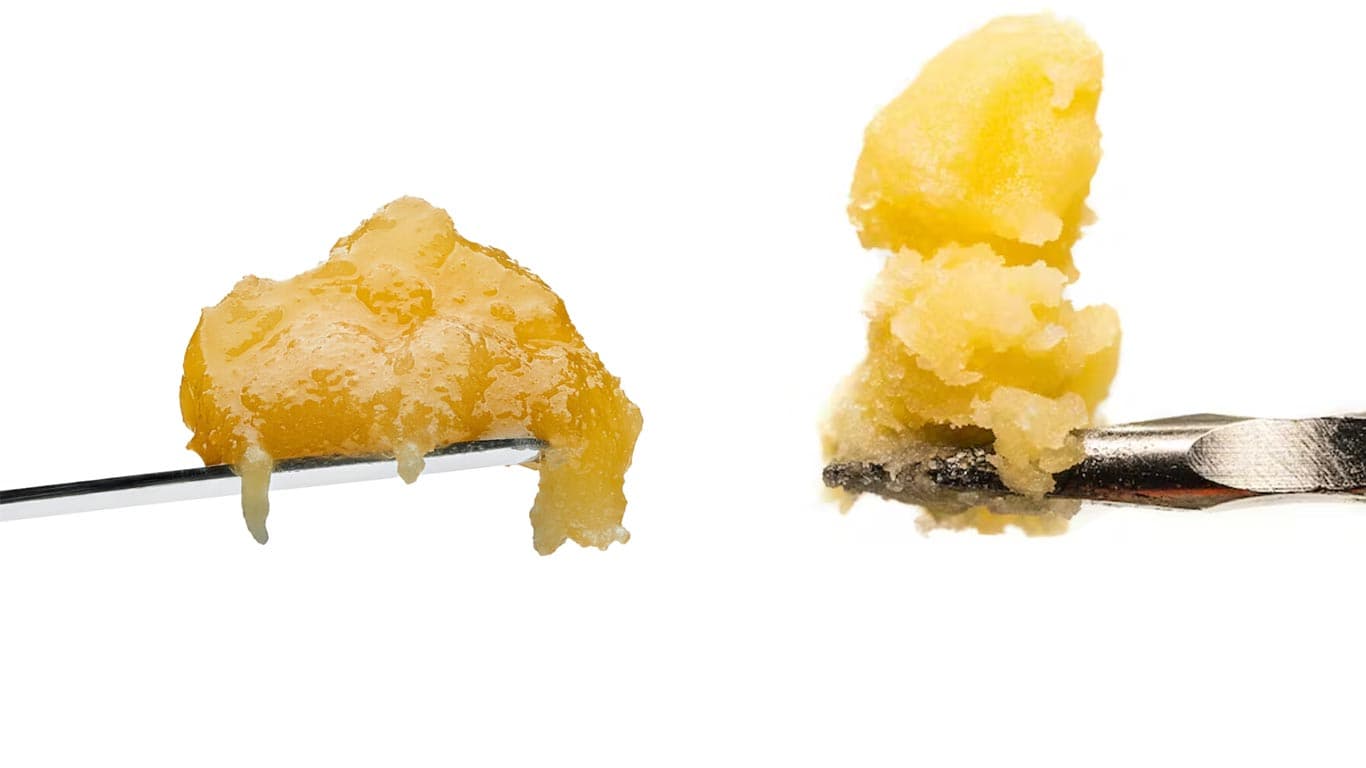
Live rosin and live resin sound nearly identical, and both are premium cannabis concentrates made from fresh-frozen plants. The single difference that drives everything else is the solvent. Live rosin uses none. Live resin uses light hydrocarbons. That one choice shapes purity, flavor, texture, safety, and price. Here is the full comparison so you can pick the right one.
What is Live Rosin?
Live rosin is a solventless cannabis concentrate made from fresh-frozen plants. The word "live" signals that the plant material was frozen right after harvest to preserve its full cannabinoid and terpene profile, so none of the natural flavor, aroma, or effect is lost before extraction.
Unlike traditional rosin, which can be pressed from dried and cured flower, live rosin starts only from frozen fresh material. Extractors wash the trichomes off with ice water to make bubble hash, then press that hash with gentle heat (typically 180°F to 200°F) and pressure (Root Sciences, 2025). The result is a pure, intensely flavorful concentrate prized by enthusiasts who care about cleanliness.
What is Live Resin?
Live resin is also made from fresh-frozen plants, frozen immediately after harvest to retain terpenes and cannabinoids. The difference is the extraction: live resin uses light hydrocarbon solvents, usually butane or propane, in a closed-loop system.
Those solvents act like a magnet, pulling specific compounds out of the plant. The extract is then purged in a vacuum oven to remove residual solvent. When done correctly, properly purged live resin tests below detection limits for residual solvents (The Press Club, 2025). Live resin is known for its versatile textures, ranging from saucy to sugary to shatter.
What’s the Difference Between Live Rosin and Live Resin?
Both begin with fresh-frozen cannabis, but on purity, flavor, and experience, the solventless path sets live rosin apart. Here is the side-by-side breakdown.
| Factor | Live Rosin (solventless) | Live Resin (hydrocarbon) |
|---|---|---|
| Extraction method | Ice water, heat, and pressure (solventless) | Light hydrocarbon solvents (butane or propane) |
| Purity | No chemical solvents ever touch the plant | Requires a purge step to remove residual solvent |
| Flavor and aroma | Full, natural terpene profile of the live plant | Flavorful, but solvents can alter the profile |
| Texture | Smooth, buttery, batter-like | Saucy, sugary, or shatter, depending on processing |
| Health and safety | No solvent exposure by design | Safe when fully purged below detection limits |
| Cost | Higher; labor-intensive, low throughput | Lower; efficient, high throughput |
1. Extraction Method
Live rosin is crafted without solvents, using only ice water, heat, and pressure. This mechanical, physical separation is about as clean as extraction gets. Live resin uses butane or propane to pull cannabinoids and terpenes from the plant, an effective but more industrial process that depends on careful chemical purging afterward.
2. Purity
Live rosin is solventless from start to finish, which is exactly why it appeals to people who want a chemical-free product. Although the ice water used in washing is technically a solvent, it evaporates without leaving any chemical residue (The Press Club, 2025). Live resin always involves a step to remove residual solvent before it is safe to consume.
3. Flavor and Aroma
Live rosin offers a natural, earthy, terpene-forward flavor thanks to its gentle process, arguably the purest representation of the plant. Live resin is flavorful too, but solvents can subtly alter the natural terpene profile during extraction.
4. Texture and Experience
Live rosin tends toward a smooth, buttery, batter-like texture that is easy to handle and ideal for dabbing or vaping, a refined experience. Live resin comes in a wider range of textures, from saucy to sugary, which appeals to users who enjoy variety.
5. Health and Safety
Because no solvents are used in making live rosin, it sidesteps chemical-exposure concerns entirely. Live resin is safe when processed and purged correctly, though the involvement of solvents is a real consideration for health-conscious users, which is why a residual-solvent panel on the COA matters.
6. Cost
Live rosin usually costs more, reflecting its labor-intensive, low-throughput nature, around 2 pounds per hour versus roughly 40 pounds per hour for hydrocarbon extraction (The Press Club, 2025). You are paying for premium quality. Live resin is typically more affordable thanks to the efficiency of solvent-based extraction.
How to Use Live Rosin
Live rosin is not just about quality, it is about versatility. Whether you are new to concentrates or a seasoned enthusiast, there are several ways to enjoy this solventless extract. Here are the most popular methods.
1. Dabbing
Dab rigs are a fan favorite. Heat your nail to a low, slow temperature to preserve the terpenes, place a small amount of rosin on the nail, and inhale a smooth, flavorful hit. A carb cap helps you make the most of every dab.
2. Vaping
For something portable, a concentrate vaporizer is ideal. These devices heat rosin evenly for flavorful, consistent hits. Choose a vape with temperature control for the best results, since lower temperatures protect the terpenes.
3. Adding to Flower
Want to upgrade your flower? Add a small amount of live rosin to a joint, bowl, or blunt for an extra kick of potency and flavor. It is the easy way to elevate a session with no extra equipment.
4. Infusion
Feeling creative? Some enthusiasts infuse edibles with live rosin, though it requires decarboxylation first to activate the THC through heat. For adventurous cooks, this can be a rewarding kitchen experiment.
Which One to Choose?
Both are high-end concentrates, so the right pick comes down to your priorities. Choose live rosin if you want a clean, solventless product and the purest expression of the plant's natural flavors, crafted with care. Choose live resin if you enjoy bold flavors and varied textures, want a more affordable option without sacrificing potency, and are comfortable with a solvent-based process.
For purity and craftsmanship, live rosin is the top choice for those who want nothing but the best. Live resin still delivers great quality and flavor, often at a friendlier price. At Pure Roots Botanicals, our Delta-9 gummies are made with USDA Certified Organic live rosin, the solventless route, with a public Certificate of Analysis for every batch.
Is live rosin better than live resin?
It depends on your priorities. Live rosin is solventless and considered the purer, more premium product, with no residual-solvent risk. Live resin is solvent-extracted, more affordable, and comes in more textures. For purity and craftsmanship, live rosin leads; for value and variety, live resin competes well.
Is live resin safe if it uses solvents?
Yes, when processed correctly. Live resin is extracted with light hydrocarbons like butane, then purged in a vacuum oven. Properly purged live resin tests below detection limits for residual solvents (The Press Club, 2025). Always check the Certificate of Analysis for a residual-solvent panel before buying.
Why is live rosin more expensive?
Live rosin is labor-intensive and low-throughput, producing roughly 2 pounds per hour compared with about 40 pounds per hour for hydrocarbon extraction (The Press Club, 2025). The solventless process and the premium fresh-frozen material it requires push the price higher than solvent-based live resin.
Does "live" mean the same thing in both?
Yes. In both live rosin and live resin, "live" means the cannabis was frozen immediately after harvest rather than dried and cured first. This preserves the plant's full terpene and cannabinoid profile, which is what gives both concentrates their rich, full-spectrum flavor and aroma.
Are Pure Roots gummies made with live rosin organic?
Our gummies are made with USDA Certified Organic live rosin, but the finished gummies are not themselves USDA Organic certified. The live rosin comes from our certified organic farm in North Carolina, and every batch ships with a public Certificate of Analysis you can review.
Found this useful? Share it.
Written by
Ben Cerullo
Founder & Master Grower · Pure Roots Botanicals
Ben Cerullo founded Pure Roots Botanicals after years in organic agriculture, driven by a belief that hemp consumers deserve federal-grade transparency. He manages USDA Certified Organic operations at the North Carolina farm (NOP ID: 5561006795) and writes on hemp education, organic certification, and consumer safety.