

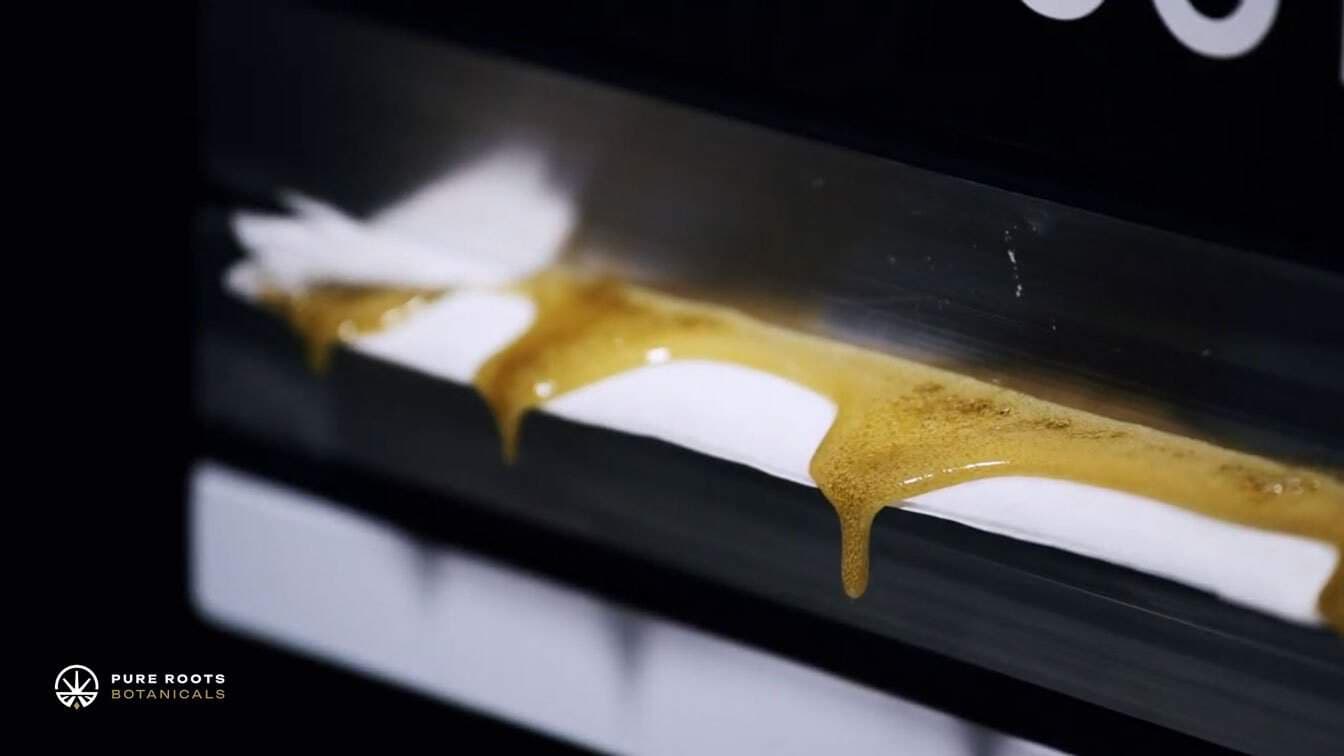
What Is Live Rosin?
Live rosin is a solventless cannabis concentrate made by pressing ice-water hash from fresh-frozen flower using only heat and pressure. It typically tests between 60% and 80% cannabinoids or higher, and because no chemical solvents touch the plant, it keeps the strain's complete terpene and minor-cannabinoid profile. Most terpenes are fragile, vaporizing between roughly 250°F and 400°F (MÜV, 2025), which is exactly why how you smoke it matters as much as what it is.
The word "live" signals that the flower was frozen immediately after harvest rather than dried and cured. Freezing locks in volatile terpenes that would otherwise evaporate during a normal cure. From there, the frozen material is agitated in ice water to separate the trichome heads into bubble hash. That hash is then pressed between heated plates, and the oil that weeps out is rosin.
That solventless path is the whole point. Many concentrates start with lower-grade trim and rely on butane or CO₂ to strip the cannabinoids out. Live rosin starts with premium fresh-frozen flower and refined hash, so the result is cleaner and more flavorful with nothing left to purge. Want the full production breakdown? See our guide on what live rosin is and how it is made.
How to Smoke Live Rosin: Best Methods
There is no single right way to use live rosin. The best method depends on whether you prioritize flavor, discretion, convenience, or duration. Dabbing wins on flavor and potency, vaping wins on portability, twaxing needs no special gear, and edibles deliver the longest effects. Here is how each one works and when to reach for it.
| Method | Heat / Setup | Best For | Who It Suits |
|---|---|---|---|
| Dabbing | 450–500°F | Maximum flavor and potency | Daily connoisseurs, flavor chasers |
| Vaping | Low–medium preset | Discretion and portability | On-the-go, social settings |
| Twaxing | Combustion (joint/bowl) | A potency boost to flower | Sharing, no extra gear |
| Edibles | Decarb ~240°F first | Long-lasting, full-spectrum | Sustained, smoke-free effects |
1. Dabbing (Best for Full Flavor & Potency)
Dabbing is the most direct way to taste everything live rosin has to offer. Vaporizing a small dab on a heated surface delivers the terpenes and cannabinoids in one concentrated, flavor-forward hit. The catch is temperature: go too hot and you burn off the very compounds you paid a premium for.
How to Dab Live Rosin:
- Heat your rig's quartz banger, then let it cool to 450–500°F. Most terpenes vaporize between roughly 250°F and 400°F, so staying in this band protects flavor (Oil Slick, 2026).
- Scoop a small dab, about the size of a grain of rice, with a clean dab tool.
- Drop it onto the cooled surface and inhale slowly and steadily.
- Cap it to direct airflow, then exhale and enjoy.
Pro tip: low and slow beats hot and fast. A 600°F-plus banger produces big clouds but torches terpenes, leaving a harsh, one-note hit (MÜV, 2025). For cold-cure rosin specifically, many users drop even lower, into the 375–450°F range.
2. Vaping (Discreet & Convenient)
If you want top-tier rosin without a full dab rig, a concentrate vaporizer is the move. Modern dab pens and e-rigs heat to a controlled temperature, produce far less odor than combustion, and fit in a pocket. Precise temperature control is the feature to look for, since it lets you protect terpenes the same way a low-temp dab does.
How to Vape Live Rosin:
- Use a dab pen or e-rig rated for concentrates, not a dry-herb or distillate cartridge.
- Load a small amount into the chamber with a dab tool.
- Set the device to a low or medium preset to avoid scorching.
- Take a slow, even draw and enjoy the flavor.
Pro tip: let the coil or chamber cool slightly between draws. Back-to-back high-heat pulls degrade the rosin and dull the taste over a session.
3. Twaxing (Adding to Flower for Extra Kick)
Twaxing means adding concentrate to flower for an extra potent, flavor-packed session, and it needs no special equipment. It is the easiest way to fold rosin into a joint, bowl, or blunt you are already rolling. The trade-off is that combustion heat is far higher than a controlled dab, so you lose some of the terpene nuance.
How to Twax with Live Rosin:
- For joints: warm the rosin slightly so it is pliable, then smear a thin line along the rolling paper before adding ground flower.
- For bowls: drop a small chunk on top of your packed, ground bud.
- For blunts: warm the rosin and spread it evenly inside the wrap before rolling.
Pro tip: do not overdo it. Too much rosin makes a joint burn unevenly, a problem smokers call "canoeing," and wastes premium product.
4. Edibles (If You Want That Long-Lasting Buzz)
Live rosin edibles are infused with solventless extract instead of standard distillate, so they carry the full-spectrum terpene and cannabinoid profile into a long-lasting, smoke-free experience. To make your own, you first decarboxylate the rosin with gentle heat, then blend it into a fat like butter or oil so the cannabinoids become active and bioavailable.
Prefer to skip the kitchen science? Our Delta-9 gummies are made with USDA Certified Organic live rosin, so you get that full-spectrum profile in a precisely dosed format. For the full breakdown, see our guide to live rosin gummies.
Difference Between Live Resin and Live Rosin
The names are nearly identical, but the products are made in fundamentally different ways: live resin is extracted with chemical solvents like butane or propane, while live rosin is pressed using only ice water, heat, and pressure. Both start from fresh-frozen flower, but only rosin is truly solventless, which means there is nothing to purge and no residual-solvent risk to test for.
| Factor | Live Resin | Live Rosin |
|---|---|---|
| Extraction | Solvents (butane, propane, CO₂) | Ice water, heat, and pressure only |
| Residual solvents | Possible; requires purge and testing | None (nothing to purge) |
| Starting material | Fresh-frozen flower | Fresh-frozen flower, refined to hash |
| Typical price/gram | $20–$50 | $50–$100 |
So if you are wondering whether live rosin is worth it, the answer is yes for anyone who prioritizes a clean, full-flavored experience with no solvent residue. For a deeper side-by-side, read live rosin vs. live resin.
Is Live Rosin Stronger?
It depends on how you define strength. Live rosin typically tests 60–80% cannabinoids, which is potent but often lower on paper than a 90%-plus distillate. The difference is that rosin keeps the plant's full terpene and minor-cannabinoid profile, which many users find produces a more balanced, rounded, and longer-feeling experience than a stripped-down high-THC distillate.
This is the practical case for the entourage effect: terpenes and minor cannabinoids working alongside THC rather than being filtered out. If raw THC percentage is your only metric, distillate may win the number. If you want potency you can actually taste, rosin delivers it in a cleaner package.
How to Store Live Rosin
Store live rosin cold, in glass, and away from light, heat, and air. Those same four factors, light, heat, oxygen, and humidity, are the documented drivers of cannabinoid degradation in cannabis, with material stored in light at room temperature decaying faster than material kept dark and cold (Forensic Science International, 2019). Rosin is no different, and its delicate terpenes are the first to go.
- Use airtight glass or a non-stick concentrate container. Silicone can absorb terpenes over time.
- Refrigerate for everyday storage to preserve texture and potency.
- Keep it out of direct light and away from heat sources.
Tip: for long-term storage, freezing is best. Let the container return to room temperature before opening so condensation does not form on the cold rosin and introduce moisture.
How Much Is Live Rosin?
Live rosin is one of the most premium cannabis concentrates, generally running $50 to $100 per gram depending on strain, quality, and production method. That is roughly double the typical price of solvent-based extracts, and the reason is structural: solventless production is more labor-intensive and yields less finished product per pound of input.
You are paying for purity and flavor, not just THC. For people who care that their concentrate is clean from the start, the premium is the point. Our USDA Certified Organic flower and live rosin products are grown in-house and batch-tested with a public Certificate of Analysis, so the quality you pay for is the quality you can verify.
Frequently Asked Questions
What temperature should I dab live rosin at?
Dab live rosin between 450°F and 500°F. Most cannabis terpenes vaporize between roughly 250°F and 400°F, so a banger in this range vaporizes the rosin cleanly without torching the flavor compounds. Cold-cure rosin can be dabbed even lower, around 375–450°F (MÜV, 2025).
Can you smoke live rosin in a joint?
Yes. Adding rosin to flower is called twaxing. Warm the rosin until pliable, smear a thin line on the rolling paper or drop a small piece into a bowl, then smoke as usual. Use a small amount to avoid uneven burning, known as canoeing.
Is live rosin stronger than regular flower?
Yes, by concentration. Live rosin typically tests 60–80% cannabinoids versus roughly 15–30% in flower. The effect feels balanced rather than harsh because rosin retains the full terpene profile, which is why many users prefer it to high-THC distillate despite a sometimes lower THC number.
What is the difference between live resin and live rosin?
Live resin is made with chemical solvents such as butane or propane. Live rosin is solventless, pressed from ice-water hash using only heat and pressure. Both use fresh-frozen flower, but only rosin carries no residual-solvent risk because no solvents are ever introduced.
How long does live rosin last in storage?
Stored cold, in airtight glass, and away from light, it stays fresh for months. Light, heat, oxygen, and humidity drive cannabinoid degradation in cannabis (Forensic Science International, 2019), so refrigeration or freezing slows the loss of potency and the delicate terpenes that define rosin.
Found this useful? Share it.
Written by
Ben Cerullo
Founder & Master Grower · Pure Roots Botanicals
Ben Cerullo founded Pure Roots Botanicals after years in organic agriculture, driven by a belief that hemp consumers deserve federal-grade transparency. He manages USDA Certified Organic operations at the North Carolina farm (NOP ID: 5561006795) and writes on hemp education, organic certification, and consumer safety.