Is THCA good? If it is grown clean, properly cured, and honestly tested, yes, it is the same plant cannabis users already know, and it carries real therapeutic interest in early research. The catch is quality. The gap between premium organic THCA flower and cheap sprayed product is enormous. Here is what THCA actually is, what it does, and how to buy it safely, with sources.
What Is THCA?
THCA stands for tetrahydrocannabinolic acid, the raw, non-psychoactive acid form of THC found in living and freshly harvested cannabis. It does not produce a high on its own. When heated through smoking, vaping, or baking, THCA loses a carboxyl group and converts into Delta-9 THC, the compound responsible for cannabis euphoria (Therapeutic Potential of Acidic Cannabinoids, PMC, 2025).
THCA flower is simply hemp flower bred to be rich in THCA. It looks, smells, and smokes like traditional cannabis because, genetically, it is the same species. Under the 2018 Farm Bill it qualified as hemp when it tested under 0.3% Delta-9 THC by dry weight. That federal standard is changing to total THC in late 2026, a point we cover below.
How Is THCA Flower Made?
Genuine THCA flower is grown, not synthesized. It starts on a farm and is cultivated like any cannabis plant, then harvested and cured before the THCA naturally converts to Delta-9 THC. No spraying and no synthetics are required to make a properly grown plant potent.
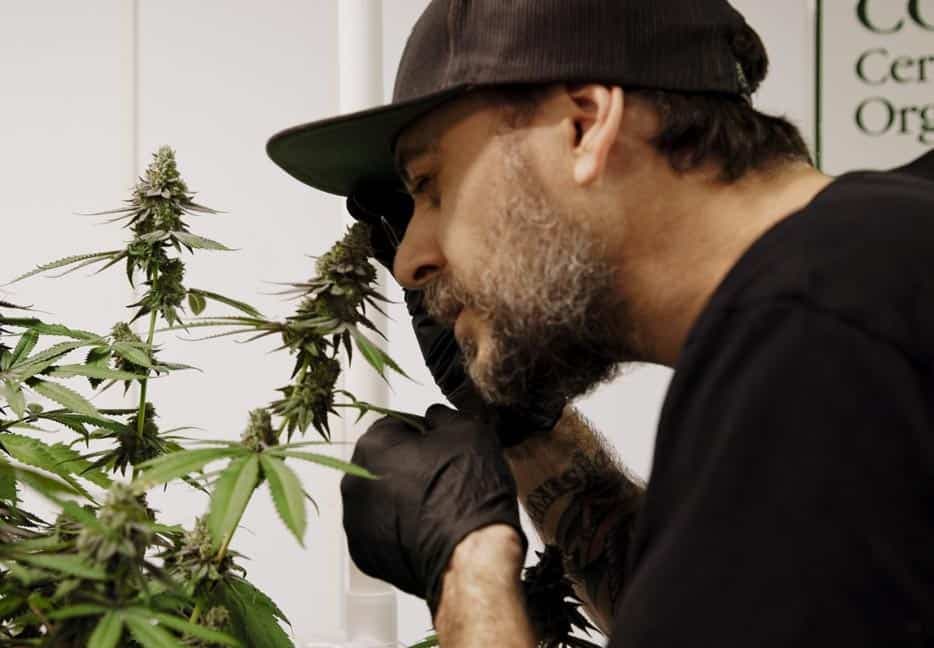
The craft is in the timing and the handling. A skilled grower preserves the trichomes, the resin glands where cannabinoids and terpenes concentrate, through gentle harvest and careful curing. Done right, the result is sticky, aromatic, terpene-rich flower that hits hard once it is decarboxylated. For a deeper look at the growing process, see our guide on how THCA flower is made.
Is THCA Flower Sprayed?
Real THCA flower is not sprayed. A properly grown plant is naturally rich in THCA and needs no enhancement. The problem is that some sellers cut corners, taking low-grade CBD flower and coating it with THCA distillate to fake potency, or skipping organic practices and leaving pesticide residue behind.
There are two distinct risks to watch for. Pesticide spraying happens during cultivation when a non-organic grower fights pests with synthetic chemicals that can linger in the flower and travel into your lungs. Enhancer spraying happens after harvest, when distillate or synthetic cannabinoids are sprayed onto weak buds to inflate their numbers.
| Flower type | What you are getting | How to spot it |
|---|---|---|
| Genuine THCA flower | Naturally high in THCA from the plant; nothing added | Clean COA, USDA Organic seal, grower-owned supply chain |
| Cannabinoid-sprayed | Cheap CBD flower coated with THCA distillate to fake potency | Crystalline residue, uneven coating, vague sourcing |
| Pesticide-contaminated | Synthetic chemicals sprayed during non-organic cultivation | No pesticide panel on COA, no organic certification |
Want the full breakdown? See our deep dive on how to spot sprayed THCA flower.
Does THCA Get You High?
Yes. Once decarboxylated, THCA flower gets you high, because the heat converts THCA into Delta-9 THC, the same intoxicating compound in traditional cannabis (British Journal of Pharmacology, 2017). Raw, unheated THCA does not, which is why some wellness users juice or eat raw flower to avoid intoxication.
Most people smoke or vape THCA flower, and you can cook with it if you decarboxylate it first. If you are wondering whether quality THCA flower can stand in for dispensary cannabis, the practical answer is yes.
Is THCA Flower the Same as Weed?
Chemically and genetically, THCA flower is cannabis. It is classified as hemp only because of a Delta-9 THC threshold in federal law, a technicality that, for now, opens the door to legality in some places where marijuana remains restricted.
Once you heat it, the distinction disappears. It hits like cannabis and delivers the same entourage of cannabinoids and terpenes. Note that the legal technicality is narrowing: federal hemp will be defined by total THC, including THCA, starting December 11, 2026 (Congressional Research Service, 2025).
Is It Safe to Smoke THCA Flower?
THCA flower is generally safe to enjoy when you know its source, but combustion adds its own risk. Burning any plant material produces tar, carbon monoxide, and other byproducts. Peer-reviewed research found that switching from smoking to vaporizing cannabis reduced self-reported respiratory symptoms within a month, because vaporization heats the flower without igniting it (Cannabis and Cannabinoid Research, 2025).
The larger concern is quality. To stay safe, focus on three things:
- Read the COA. Confirm the flower was tested and is free of pesticides, mold, and heavy metals.
- Look for the USDA Organic seal, the only federal standard backed by mandatory audits of how the crop was grown.
- Find out whether the company grows its own flower or rebrands someone else's.
If you want to lower combustion exposure, try a dry herb vaporizer, which heats flower gently and preserves flavor without the smoke. Browse our dry herb vaporizers.
Why Organic THCA Flower Matters
There is flower, and then there is USDA Certified Organic flower. That seal is the only federal hemp standard verified through mandatory annual third-party inspection, certifying that the soil, seed, water, and handling followed strict rules with no synthetic pesticides and no prohibited inputs (USDA NOP Instruction 2040). For a crop that absorbs what is in its soil, that provenance is not marketing, it is peace of mind.
At Pure Roots Botanicals, we grow our THCA flower on a USDA Certified Organic hemp farm in North Carolina. From seed to sale, we control every step, with public Certificates of Analysis and a certification you can verify yourself (USDA Organic Integrity Database, NOP ID 5561006795).
So… Is THCA Good?
Yes, THCA is good if you buy the right product. It is cannabis in a (narrowing) legal gray area: it gets you high once heated, it is rich in terpenes, and grown organically and cured properly, it can rival or beat what you find at most dispensaries. Early research even points to anti-inflammatory and neuroprotective interest in the raw acid form.
But quality decides everything. The distance between premium organic THCA flower and cheap sprayed product sold at gas stations is wide. Stick with transparent growers, certified farms, and flower backed by a clean COA. Ready to taste the difference? Explore our USDA Certified Organic THCA flower, grown in the U.S. with no shortcuts.
Does raw THCA get you high?
No. Raw, unheated THCA is non-psychoactive and does not produce a high. It only becomes intoxicating when heat converts it into Delta-9 THC through decarboxylation, which is why smoking or vaping THCA flower feels like traditional cannabis but juicing raw flower does not (Therapeutic Potential of Acidic Cannabinoids, PMC, 2025).
What are the researched benefits of THCA?
Peer-reviewed animal research shows THCA acts as a potent PPARγ agonist with neuroprotective and anti-inflammatory activity, with interest for neurodegenerative and inflammatory conditions (British Journal of Pharmacology, 2017). These are preclinical findings. THCA is not an approved treatment for any disease.
Is smoking THCA flower safe?
Combustion of any plant material produces tar and carbon monoxide. Clean, lab-tested, organically grown flower removes the contamination risk, and switching to a vaporizer reduces respiratory symptoms, since it heats flower without igniting it (Cannabis and Cannabinoid Research, 2025).
How can I tell if THCA flower is sprayed or fake?
Watch for crystalline residue, uneven coating, and missing lab data. Genuine flower is naturally high in THCA and comes with a full Certificate of Analysis, including a pesticide panel, plus organic certification. Cheap sprayed product fakes potency by coating low-grade CBD flower with distillate.
Is THCA flower still legal?
For now, under the 2018 Farm Bill, but the standard is changing. Public Law 119-37 redefines federal hemp using total THC, including THCA, effective December 11, 2026, which will make most high-THCA flower fail the federal hemp test (Congressional Research Service, 2025). Check your state law before buying.
Found this useful? Share it.
Written by
Ben Cerullo
Founder & Master Grower · Pure Roots Botanicals
Ben Cerullo founded Pure Roots Botanicals after years in organic agriculture, driven by a belief that hemp consumers deserve federal-grade transparency. He manages USDA Certified Organic operations at the North Carolina farm (NOP ID: 5561006795) and writes on hemp education, organic certification, and consumer safety.