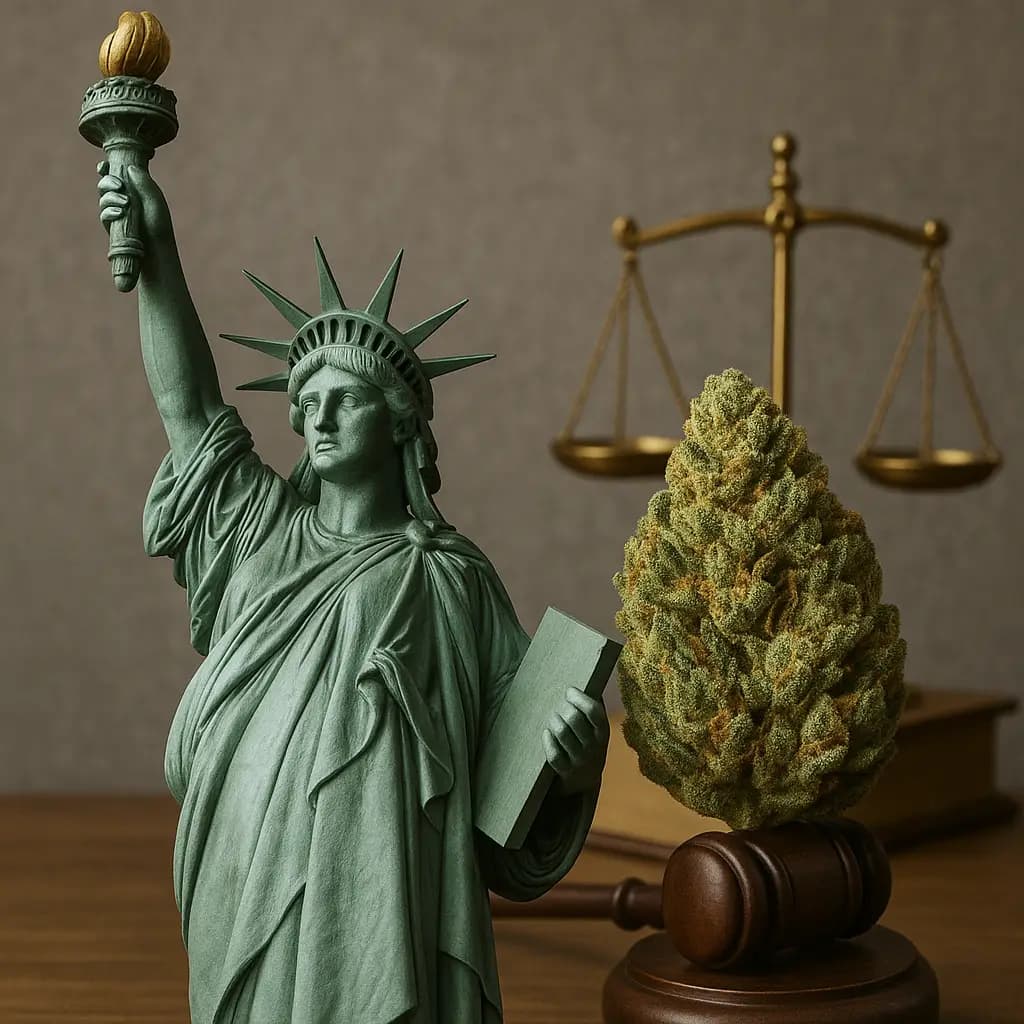
Is THCA flower legal in New York? In 2026, the honest answer is: it is complicated, and it is tightening. The original version of this article, written in April 2025, said yes. That snapshot has expired. Federal law now defines hemp by total THC, New York treats intoxicating THCA products as cannabis, and a hard federal deadline lands on December 11, 2026. Here is the accurate, current picture, with official sources.
What Is THCA, Again?
THCA (tetrahydrocannabinolic acid) is the raw, non-psychoactive acid form of THC found in the living cannabis plant. It does not get you high on its own. Apply heat, though, and a reaction called decarboxylation strips a carboxyl group and converts THCA into Delta-9 THC, the compound responsible for the cannabis high (Therapeutic Potential of Acidic Cannabinoids, PMC, 2025).
So the chemistry sits at the heart of the legal debate. On paper, raw THCA is not intoxicating. In practice, you light it, and it behaves like high-potency cannabis. Lawmakers and regulators have spent the past two years closing the gap between those two facts.
What Does Federal Law Say About THCA?
Federal law on THCA changed dramatically in late 2025. The 2018 Farm Bill defined hemp as cannabis with no more than 0.3% Delta-9 THC by dry weight, and it did not count THCA before heating. That gap is what made high-THCA flower marketable as hemp (Congressional Research Service, 2025).
Then, on November 12, 2025, President Trump signed Public Law 119-37. Section 781 amends the hemp definition at 7 U.S.C. 1639o to use a total THC standard, inclusive of THCA, capped at 0.3% by dry weight, and adds a ceiling of 0.4 milligrams of total THC per container for finished products. The change was set to take effect 365 days after enactment (Congressional Research Service, 2025). A September 2026 law, Public Law 119-103, moved the start date to December 11, 2026 for naturally occurring cannabinoids such as THCA.
The DEA had already taken this view. In 2024 correspondence, the agency stated that THCA does not meet the definition of legal hemp, because cannabinoid content must be measured using post-decarboxylation testing that captures THCA-derived THC (Marijuana Moment / DEA, 2024). The 2025 law writes that interpretation into the statute.
Is THCA Legal in New York?
In New York, intoxicating THCA flower is not sold as legal hemp. The state Office of Cannabis Management (OCM) treats hemp-derived products designed to be intoxicating as cannabis, regulated through the licensed adult-use system, not as general-market hemp (NY OCM, 2026). New York adopted a total-THC framework for hemp earlier than the federal government did.
Practically, that means high-THCA smokable flower belongs in licensed dispensaries for adults 21 and older, not in gas stations or unlicensed smoke shops. New York has run aggressive enforcement against unlicensed retailers selling intoxicating products outside that system.
| Timeframe | Federal hemp standard | New York treatment |
|---|---|---|
| Now through Dec. 10, 2026 | Hemp = ≤0.3% Delta-9 THC by dry weight (2018 Farm Bill); THCA not counted pre-decarboxylation | NY OCM treats intoxicating THCA flower as cannabis, not hemp |
| Dec. 11, 2026 onward | Hemp redefined to ≤0.3% TOTAL THC (Delta-9 + THCA); 0.4 mg total-THC cap per container | High-THCA smokable flower fails the federal hemp test nationwide |
Once the federal change takes effect on December 11, 2026, federal law and New York law will line up closely: high-THCA flower will not qualify as hemp anywhere, and intoxicating cannabis products will be confined to state-licensed channels (Regulatory Oversight, Troutman Pepper Locke, 2025).
But Isn’t Recreational Cannabis Already Legal in NY?
Yes. Adult-use marijuana is legal in New York for adults 21 and older, regulated by the Office of Cannabis Management and sold through licensed dispensaries (NY OCM, 2026). That is the lawful path for intoxicating cannabis products in the state, including high-THCA flower.
The distinction that mattered in the old version of this article, hemp THCA sold outside the dispensary system, is the exact gap regulators have been closing. Buying intoxicating cannabis in New York means buying from a state-licensed retailer, with the testing, labeling, and age controls that license requires.
Things to Watch Out For
The rules are moving quickly, and the difference between compliant and non-compliant product is no longer subtle. Keep three things front of mind.
Lab Testing Is Key
Demand a recent Certificate of Analysis (COA) from an accredited lab, and read it for total THC, not just Delta-9. Under the post-2026 federal standard, total THC is what determines legal status, and a clean Delta-9 number can hide a high THCA result. No COA means no purchase.
Laws Can Change
They already have. The federal total-THC redefinition takes full effect December 11, 2026, and states continue to pass their own restrictions (Congressional Research Service, 2025). Treat any "THCA is legal" claim as time-stamped, and confirm the current rule before you buy.
Stay Smart When Traveling
Legality is local and inconsistent. States such as Idaho and Arkansas restrict or ban intoxicating hemp products outright, and the federal change does not make crossing state lines with high-THCA flower safe. Know the law where you are headed, not just where you started.
Why THCA Flower Is So Popular
THCA flower earned its following because it is the real, terpene-rich plant, not a watered-down substitute. Harvested and handled before THC conversion, it delivers the aroma and potency cannabis users expect once it is heated. Quality, when the flower is grown clean, can rival anything from a dispensary.
That appeal does not override the law, and the law is the part that changed. As of 2026, the popularity of THCA flower runs straight into a tighter total-THC standard and a hard federal deadline. If you buy intoxicating cannabis in New York, buy it through a licensed channel, insist on full lab results, and keep an eye on the calendar.
Is THCA flower legal in New York in 2026?
Intoxicating THCA flower is not sold as legal hemp in New York. The Office of Cannabis Management treats hemp-derived intoxicating products as cannabis, which can only be sold through licensed adult-use dispensaries for adults 21 and older. New York adopted a total-THC framework ahead of the federal government.
What changes on December 11, 2026?
Public Law 119-37, signed November 12, 2025, redefines federal hemp using a total-THC standard that counts THCA, capped at 0.3% by dry weight, plus a 0.4 mg total-THC cap per container. A September 2026 law (Public Law 119-103) set the start date for naturally occurring cannabinoids such as THCA at December 11, 2026 (Congressional Research Service, 2025).
Does the DEA consider THCA legal hemp?
No. In 2024 correspondence, the DEA stated that THCA does not meet the definition of legal hemp, because cannabinoid levels must be measured post-decarboxylation, which captures THCA that converts to Delta-9 THC when heated (Marijuana Moment / DEA, 2024). The 2025 law codifies that view.
Why was the old April 2025 answer different?
In April 2025, federal hemp was defined by Delta-9 THC alone and did not count THCA before heating, so high-THCA flower could be marketed as hemp. That gap closed when Congress adopted a total-THC standard in November 2025, effective December 11, 2026.
How do I check whether a product is compliant?
Read a recent Certificate of Analysis from an accredited lab and look at the total THC figure, not just Delta-9. Under the post-2026 standard, total THC determines legal status. If there is no COA, or it only reports Delta-9, do not buy the product.
Found this useful? Share it.
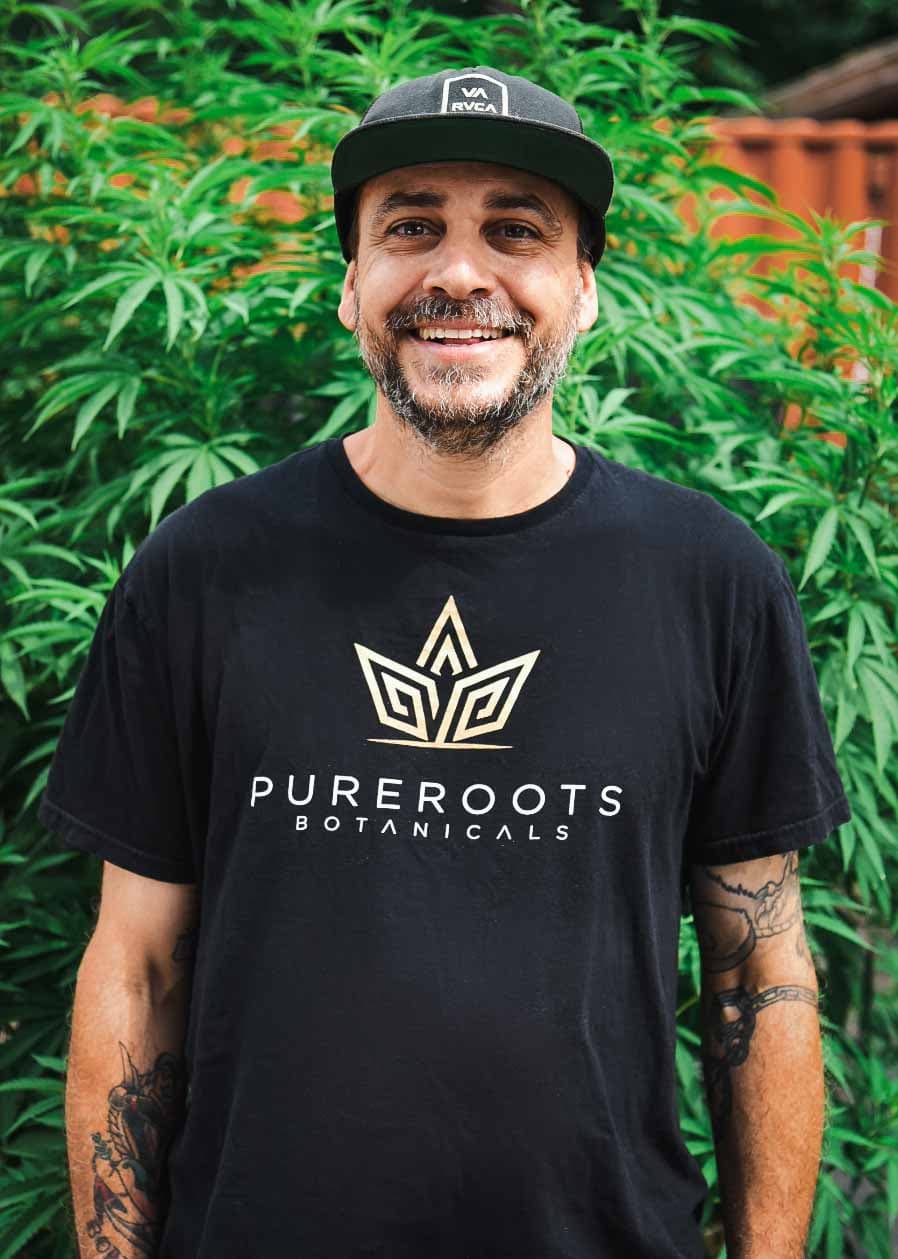
Written by
Ben Cerullo
Founder & Master Grower · Pure Roots Botanicals
Ben Cerullo founded Pure Roots Botanicals after years in organic agriculture, driven by a belief that hemp consumers deserve federal-grade transparency. He manages USDA Certified Organic operations at the North Carolina farm (NOP ID: 5561006795) and writes on hemp education, organic certification, and consumer safety.