Is THCA safe? For most healthy adults, used responsibly and sourced from a clean, lab-tested supplier, the evidence so far is reassuring. The honest caveats: research in humans is early, and the real-world risk is rarely the cannabinoid itself. It is contamination, dosing, and how you consume it. This guide walks through what THCA is, how it works, its researched benefits, and the practical risks to manage.
What is THCA flower?
THCA stands for tetrahydrocannabinolic acid, a naturally occurring compound in cannabis. In its raw state it is non-psychoactive: it does not bind efficiently to the CB1 receptors that produce a high, so unheated THCA does not get you intoxicated (Therapeutic Potential of Acidic Cannabinoids, PMC, 2025).
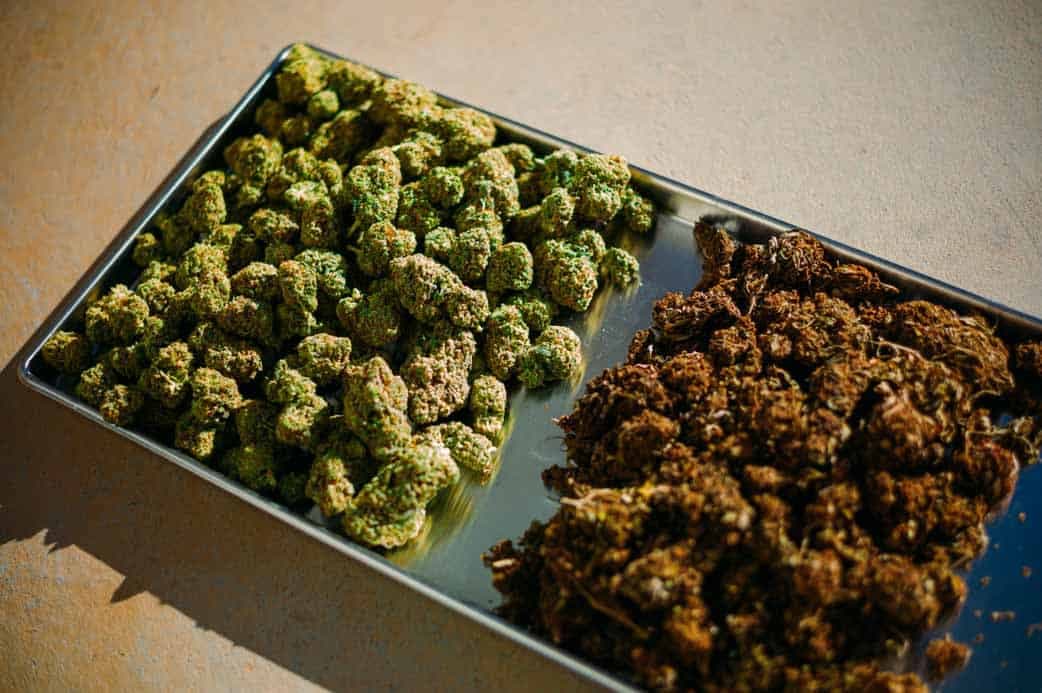
THCA flower is hemp flower bred to be rich in this acid. That changes the moment heat enters the picture, which is where the safety conversation really begins.
How THCA Works
THCA becomes THC when you apply heat. The reaction, called decarboxylation, removes a carboxyl group from the molecule and converts THCA into Delta-9 THC, the active compound responsible for the traditional cannabis high (Therapeutic Potential of Acidic Cannabinoids, PMC, 2025).
After conversion, THC interacts with CB1 receptors in the brain to produce psychoactive effects. The raw acid does not create that same interaction, which is why some users prefer unheated forms, such as juicing fresh flower, for wellness purposes without intoxication.
Chemical Composition and Safety Profile of THCa
Molecularly, THCA is almost identical to THC, differing by a carboxyl group that keeps it non-psychoactive in its raw form. Because it lacks THC's intoxicating effect, raw THCA is often viewed as better suited to wellness use for people who want to avoid a high. That structural difference is well documented in the cannabinoid literature (British Journal of Pharmacology, 2017).
Raw THCA appears to be non-toxic, but safety is not automatic. It depends on the consumption method, the dose, your individual health, and crucially the purity of the product. The cannabinoid is rarely the problem. What is sprayed on it or grown into it can be.
Potential Health Benefits
Some of THCA's popularity stems from its researched therapeutic potential. The science is early, but peer-reviewed preclinical studies point to several areas of interest:
- Anti-inflammatory: Δ9-THCA reduced inflammation and alleviated collagen-induced arthritis in mice through PPARγ and CB1 pathways (British Journal of Pharmacology, PMC, 2020).
- Neuroprotective: THCA acts as a potent PPARγ agonist and improved motor deficits while preventing striatal degeneration in a Huntington's disease model (British Journal of Pharmacology, 2017).
- Antiemetic: Acidic cannabinoids have shown anti-nausea activity in preclinical work, of interest for chemotherapy-related nausea (Therapeutic Potential of Acidic Cannabinoids, PMC, 2025).
- Analgesic and appetite-related: Early evidence suggests potential pain-relief and appetite effects, though human trials are lacking.
Methods of Consumption and Their Safety
The safety of THCA flower depends heavily on how you consume it, because heat is what turns a non-intoxicating acid into psychoactive THC. Each method carries a different profile.
| Method | Effect on THCA | Safety notes |
|---|---|---|
| Raw (juicing, smoothies) | Preserves THCA, no conversion to THC, non-intoxicating | Low risk; long-term data limited |
| Smoking or vaping | Heat converts THCA to Delta-9 THC; intoxicating | Combustion byproducts; vaporizing lowers them |
| Edibles or tinctures | Non-heated retains THCA; heat or digestion can convert it | Depends on purity, dosing, and processing |
Smoking and vaping convert THCA to THC and carry the considerations of any inhaled cannabis. Combustion in particular produces tar and carbon monoxide. Peer-reviewed work found that switching from smoking to vaporizing cannabis reduced respiratory symptoms, because vaporization heats flower without igniting it (Cannabis and Cannabinoid Research, 2025). Raw consumption preserves THCA without conversion, though long-term data is limited.
Considerations for Responsible Use
THCA flower is generally regarded as safe, but product quality varies widely in today's market. To avoid headaches and other unwanted effects, keep these practices in mind.
Buy from a Reputable Supplier
Avoiding side effects starts with quality. Products from unreliable sources can contain pesticides, heavy metals, or residual solvents that cause headaches and worse. Always buy lab-tested flower from a supplier that publishes a current Certificate of Analysis showing it is clean.
Choose the Right Strain for Your Needs
- Sativa-leaning: uplifting and energizing, but too much can trigger anxiety or restlessness in sensitive users.
- Indica-leaning: relaxing and good for stress, though overindulging brings drowsiness and lethargy.
- Hybrid: a balanced effect that shifts depending on which side dominates, so know what you are using.
Start Low and Increase Gradually
If you are new to THCA or trying a new strain, start with a low dose and work up slowly. This helps you gauge tolerance and avoid dizziness, nausea, or an overwhelming high.
Consult with a Healthcare Provider
If you have an underlying health condition or take medication, talk to a healthcare provider before using THCA flower. Cannabinoids can interact with other drugs, and professional guidance helps you avoid complications.
Quality and Sourcing
Quality and sourcing directly determine how safe THCA flower is. As demand grows, not every supplier holds to the same standard, so it pays to scrutinize where and how your flower was grown.
- Lab testing and purity: insist on a Certificate of Analysis confirming the product is free of pesticides, heavy metals, mold, and solvents.
- Organic and sustainable cultivation: choose organically grown flower to avoid synthetic pesticides and fertilizers. The USDA Organic seal is the only federal standard backed by mandatory annual audits of growing practices (USDA NOP Instruction 2040).
- Trusted suppliers and transparency: favor sellers who are open about sourcing and quality control. Unlicensed vendors are more likely to sell contaminated or mislabeled product.
Focusing on quality and sourcing meaningfully reduces the risk of consuming harmful flower and supports a safe, enjoyable experience.
So, Is THCA Safe?
THCA appears safe for most healthy adults when used responsibly. Raw THCA carries little risk, and activated THCA, once heated into THC, should be treated with the same care as traditional cannabis. The science on its benefits is promising but early, concentrated in animal models rather than human trials.
Pay attention to how your body responds, and prioritize lab-tested, organically grown flower from a transparent source. Know what you are using, how much, and where it came from. Start low, choose products backed by a public COA, and you put yourself in the best position for a safe experience.
Is THCA safe to consume?
For most healthy adults, raw THCA appears low-risk, and activated THCA carries the same considerations as traditional cannabis. The bigger safety factor is product quality. Pesticides, heavy metals, and solvents from unregulated sources pose more risk than the cannabinoid itself, so lab testing and organic sourcing are key.
What are the side effects of THCA flower?
Raw THCA is non-intoxicating and side effects are minimal. Once heated to THC, smoked or vaped THCA can cause the typical effects of cannabis: dizziness, dry mouth, anxiety, or an overwhelming high if you take too much. Starting with a low dose helps you avoid these.
Does THCA have proven health benefits?
Peer-reviewed animal studies show anti-inflammatory and neuroprotective activity through PPARγ, including relief of arthritis in mice (British Journal of Pharmacology, 2020). Human clinical evidence is still limited, so THCA is not an approved treatment for any condition.
Is vaping THCA safer than smoking it?
Vaporizing heats flower without igniting it, which reduces combustion byproducts like tar and carbon monoxide. Peer-reviewed research found that users who switched from smoking to vaporizing reported fewer respiratory symptoms within a month (Cannabis and Cannabinoid Research, 2025).
How do I know my THCA flower is clean?
Read the Certificate of Analysis from an accredited lab and confirm it screens for pesticides, heavy metals, mold, and solvents. Look for the USDA Organic seal, the only federal standard backed by mandatory annual audits of how the crop was grown, and buy from a transparent, grower-owned supplier.
Found this useful? Share it.
Written by
Ben Cerullo
Founder & Master Grower · Pure Roots Botanicals
Ben Cerullo founded Pure Roots Botanicals after years in organic agriculture, driven by a belief that hemp consumers deserve federal-grade transparency. He manages USDA Certified Organic operations at the North Carolina farm (NOP ID: 5561006795) and writes on hemp education, organic certification, and consumer safety.