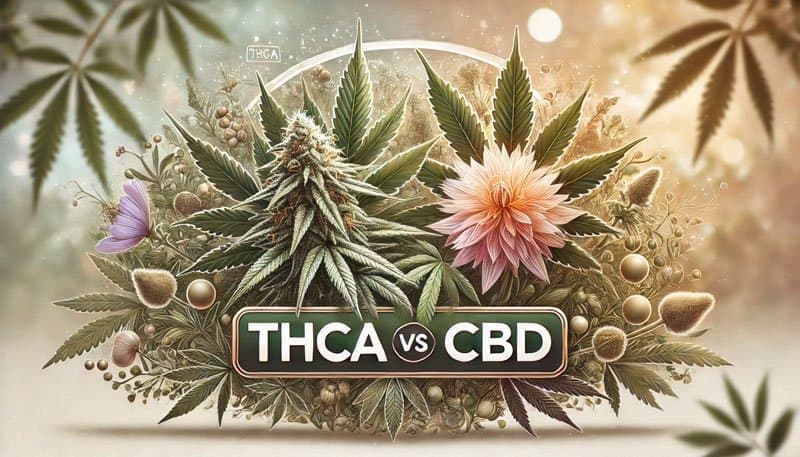
Walk into the world of cannabis and the choices pile up fast: oils, edibles, flower, topicals. Two of the most confused are THCA flower and CBD flower. They can look nearly identical in the jar and even smell alike, yet they have very different personalities and very different effects on your day.
The short version: CBD flower keeps you clear-headed no matter what, while THCA flower turns into intoxicating THC the moment you heat it. Below, we walk through what each one is, how they differ across the four things that matter most, and how to pick the right one for your routine.
What is THCA flower?
THCA flower is hemp harvested while its cannabinoid content is still in the raw, acidic form called tetrahydrocannabinolic acid. In that state, THCA is non-intoxicating; it poorly crosses the blood-brain barrier and barely binds the CB1 receptors responsible for a high. So raw THCA, by itself, will not get you stoned.
The catch is heat. Smoking or vaping decarboxylates THCA into THC, the psychoactive cannabinoid. At that point the experience is indistinguishable from conventional THC. People reach for raw THCA mainly for its studied properties, including anti-inflammatory activity through the PPAR-gamma pathway, plus interest in neuroprotection and nausea relief. For a deeper look, see our complete THCA guide.
What is a CBD flower?
CBD (cannabidiol) is a cannabinoid that will not get you high, heated or not. CBD flower contains only trace THC and THCA, kept under the 0.3% delta-9 threshold, which is nowhere near enough to cause intoxication. You stay clear-headed while still feeling the effects.
The value of CBD flower comes from its full cast of supporting compounds: minor cannabinoids and terpenes that work together to support stress relief, calm, and recovery without a head change. It suits anyone who wants to take the edge off after a busy day, ease tension, or wind down at night while staying fully functional. If a productive, sober calm is the goal, CBD flower is the natural fit.
Key Differences Between THCA and CBD Flower
Now that you know each one, here are the four differences that actually shape your choice: whether it gets you high, where it stands legally, what it is studied for, and how you use it.
Psychoactive properties:
This is the headline split. THCA flower becomes intoxicating once heated, because the THCA converts to THC. Used raw, it stays non-intoxicating, which is why some people juice or low-temp it for benefits without a high. CBD flower, by contrast, never gets you high. Heat it, vape it, infuse it; the effect stays the same calm, non-psychoactive baseline. Think of CBD as the friend who stays level no matter the situation.
Legal Status
CBD has the clearer path. CBD flower under 0.3% delta-9 THC is broadly accepted as hemp. THCA is murkier and changing quickly. It has been federally legal as hemp under the 2018 Farm Bill's delta-9 standard, but several states already treat THCA as THC and restrict it. A November 2025 spending law redefines hemp using total THC, which counts THCA after decarboxylation, and caps finished products at 0.4 mg per container, with enforcement starting December 11, 2026 (DLA Piper, 2025). Always check your current state law before buying THCA flower.
Health Benefits
The two overlap and diverge. Both are studied for anti-inflammatory activity. Beyond that, researchers explore THCA for neuroprotective and anti-nausea effects, while CBD is best known for supporting calm, sleep, and recovery. A 2025 randomized, placebo-controlled crossover trial of a CBD and terpene formula found it increased combined slow-wave and REM sleep by about 1.3% of total sleep time, with responsive participants gaining up to 48 minutes of restorative sleep per night (Journal of Clinical Sleep Medicine, 2025). Depending on your needs, one may fit better, or you might use CBD by day and the other at night.
Usage methods
THCA flower gives you a choice. Want the benefits without the high? Use it raw. Want the full THC experience? Light it up. CBD flower is more straightforward: smoke, vape, or infuse it, and the effects stay consistent and non-psychoactive every time. CBD also appears in a wider range of formats, from oils and edibles to topicals, making it easy to fold into an existing routine.
The Future of THCA and CBD Flower
The cannabis space is moving quickly, and both THCA and CBD flower sit near the front of that change. Here is where each one looks to be heading as products, consumers, and regulations all evolve together.
Growing Popularity of THCA Flower
THCA flower has surged because it offers the best of both worlds: raw benefits or a full THC experience, decided by how you use it. That flexibility keeps drawing new users. The wild card is regulation. With total-THC rules arriving federally in late 2026, the THCA market's growth will depend heavily on how laws shake out state by state.
CBD Flower’s Staying Power
CBD flower has already earned a durable place in wellness, and its momentum is not slowing. As more people explore natural options for stress, sleep, and recovery, CBD keeps showing up in mainstream routines, from fitness recovery to sleep support to skincare. Its non-intoxicating profile and clearer legal footing make it a steady, low-risk entry point.
Evolving legislation
Law shapes both products, and CBD enjoys the more settled framework. THCA faces the bigger shift: the move to a total-THC standard, plus state-level bans, will redraw what can be sold and where. Expect tighter testing, clearer labeling, and continued legal challenges as the industry adjusts to the redefined federal hemp rules.
THCA vs. CBD: A Comparative Overview
Here is the whole comparison in one place. Use it as a quick reference when you are standing in front of a product menu deciding which flower fits the moment.
| Feature | THCA Flower | CBD Flower |
|---|---|---|
| Psychoactive? | No (unless heated) | No |
| Converts to THC? | Yes, upon heating | No |
| Legal status | Hemp-legal if delta-9 THC at or below 0.3%; total-THC rules tightening in 2026 | Hemp-legal if delta-9 THC at or below 0.3% |
| Common uses | Inflammation, neuroprotection, appetite, post-heat relief | Anxiety, pain relief, sleep support |
| Consumption methods | Raw (juicing), smoking, vaping | Oils, edibles, topicals, smoking |
Unique Insight
Most comparisons stop at the cannabinoid, but for these two plants the soil matters more than the molecule. Hemp is a documented bioaccumulator: it pulls heavy metals, pesticide residues, and industrial chemicals out of the ground and concentrates them in its tissue. Whether you choose THCA or CBD flower, you are inhaling whatever the plant absorbed during growth. That is why sourcing, not just the label, decides how clean your flower really is. USDA Certified Organic flower carries a documented, audited soil history; an unverified "organically grown" claim does not.
The Future of THCA and CBD Flower
Looking further out, both flowers point toward the same destination: cleaner inputs and clearer proof. Consumers increasingly ask not just "how strong" but "how was this grown and who tested it." That shift rewards transparent, certified producers over anonymous bulk biomass, regardless of which cannabinoid leads the label.
Growing Popularity of THCA Flower
Even amid regulatory pressure, demand for high-quality THCA flower remains strong because users value the flexibility and the fuller plant profile. The likely winners are growers who can document peak-harvest potency, careful curing, and verifiable clean sourcing, exactly the qualities a race-to-the-bottom market tends to skip.
CBD Flower’s Staying Power
CBD flower's appeal endures because it answers a simple, durable need: relief and calm without impairment, backed by a growing body of clinical research. As studies on CBD and sleep mature, expect CBD flower and its extracts to remain a fixture of everyday wellness rather than a passing trend.
Evolving legislation
The throughline for both is the same: regulation is tightening toward total-THC accounting, mandatory testing, and honest labeling. For consumers, that is good news. Choose products with public Certificates of Analysis and verifiable certification, and the legal noise becomes far easier to navigate.
Want flower you can actually verify, all the way back to the soil? Browse our USDA Certified Organic THCA flower and CBD products →
Will THCA flower or CBD flower get me high?
CBD flower will not get you high, heated or not, because it stays under 0.3% delta-9 THC. THCA flower will get you high once you heat it: smoking or vaping converts THCA into intoxicating THC at up to an 87.7% ratio (Confidence Analytics). Used raw, THCA stays non-intoxicating.
Is THCA flower legal where CBD flower is legal?
Not always. CBD flower under 0.3% delta-9 THC has a clearer legal path nationwide. THCA legality is changing: a November 2025 federal law redefines hemp by total THC starting December 11, 2026 (DLA Piper), and several states already restrict THCA. Check your state law before buying.
Which is better for sleep, THCA or CBD flower?
CBD is the more studied option for sleep. A 2025 randomized trial found a CBD and terpene formula increased restorative slow-wave and REM sleep by about 1.3% of total sleep time, up to 48 minutes nightly for responsive users (Journal of Clinical Sleep Medicine, 2025). THCA is studied more for inflammation and nausea.
Why does sourcing matter for both THCA and CBD flower?
Hemp is a bioaccumulator that draws contaminants from soil into the plant, so whatever was in the ground ends up in your flower. USDA Certified Organic certification documents a clean, audited soil history, while an unverified "organically grown" label carries no federal definition or inspection.
Can I use THCA and CBD flower together?
Yes, and many people do. CBD flower suits clear-headed daytime calm, while heated THCA delivers a full THC experience for evenings or relief. Combining cannabinoids and terpenes can also produce the entourage effect, where compounds work better together than alone.
Found this useful? Share it.
Written by
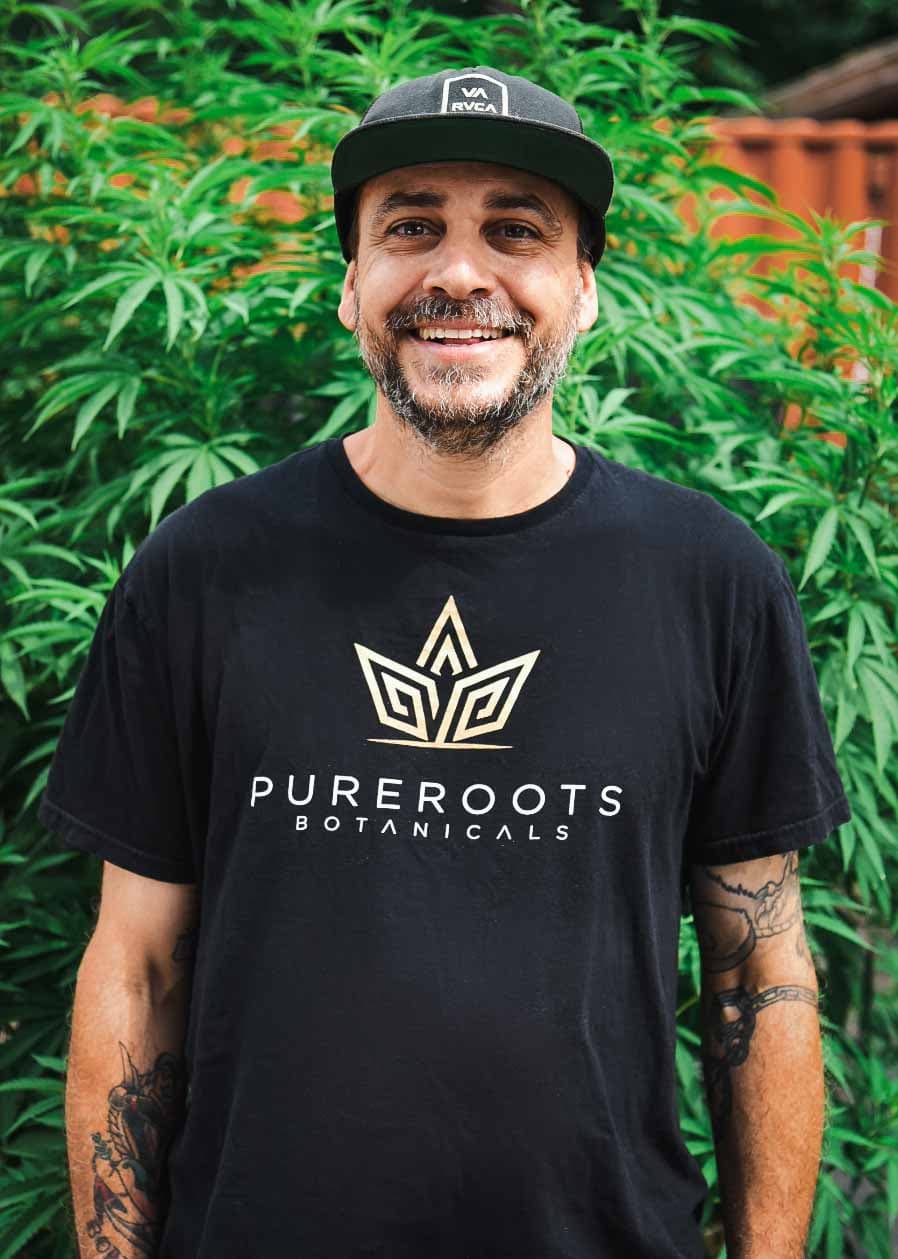
Ben Cerullo
Founder & Master Grower · Pure Roots Botanicals
Ben Cerullo founded Pure Roots Botanicals after years in organic agriculture, driven by a belief that hemp consumers deserve federal-grade transparency. He manages USDA Certified Organic operations at the North Carolina farm (NOP ID: 5561006795) and writes on hemp education, organic certification, and consumer safety.