


If you've seen "live rosin" on a bag of gummies, it names the extract, not the candy. Live rosin comes from hemp frozen right after harvest, and no butane or other chemical solvent goes into making it. Most THC gummies use a different extract, called distillate.
What Makes Live Rosin Gummies Different From Regular Edibles?
The difference is the extract. Most THC gummies use distillate, a refined oil that is almost all Delta-9 THC. Refining strips out most of the plant's terpenes, the compounds behind its smell and taste, while pressed live rosin keeps more of them.
The THC itself is the same molecule either way. Ours just keep more of the plant's character: live rosin is pressed, not refined, so more of the hemp's natural aroma and flavor comes through than with distillate. Using live rosin, we preserve the plant's full-spectrum profile, including other cannabinoids, not just THC.
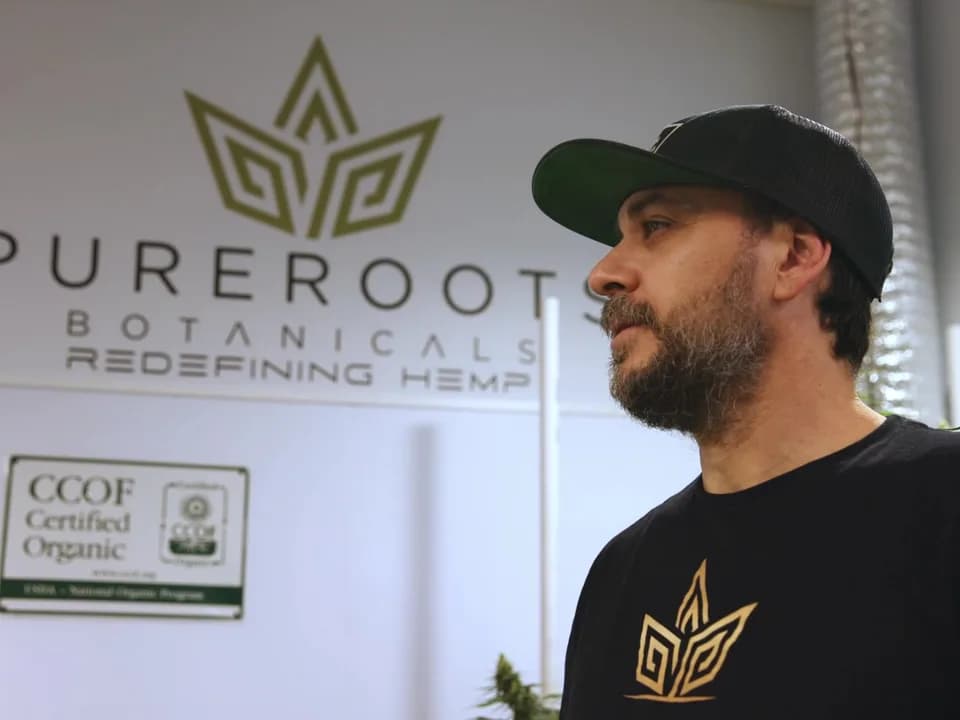
We do live rosin gummies not because you get the best yield, because I'm telling you, it is the hardest way to do it and you get the least amount of it. So it's definitely not the most economical on my side, but I believe it's the best.
What is the entourage effect?
The entourage effect is the way cannabinoids and terpenes work together, each shaping how the others come through. It's the reason we press live rosin instead of refining the plant down to THC alone: the plant's full profile stays together.
How Are Live Rosin Gummies Made?
Four steps turn frozen hemp into a gummy, and the first three make the rosin.
- Freeze. Hemp goes into the freezer right after harvest instead of being dried, which slows the loss of its terpenes.
- Wash. Ice water and gentle stirring knock the tiny resin glands off the frozen flower, and fine screens catch them as bubble hash.
- Press. Low heat and pressure squeeze the dried hash into a golden oil: live rosin. No butane or other chemical solvent goes into making the rosin.
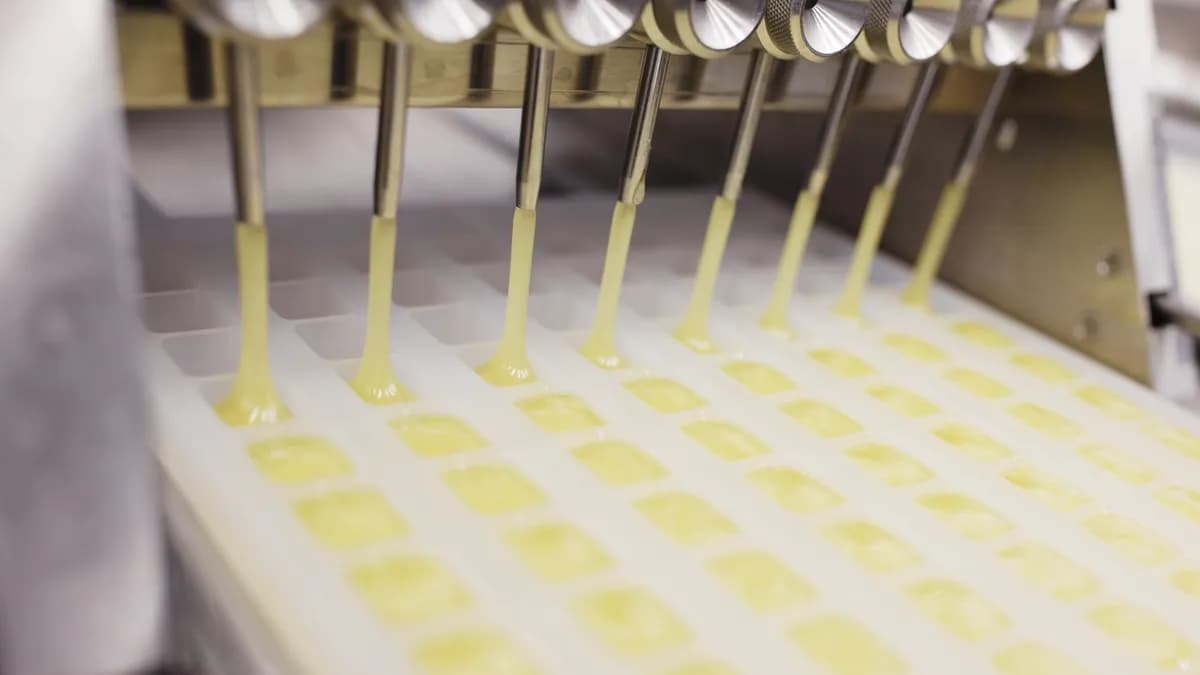
- Infuse. Gentle heat turns the THCA in the rosin into Delta-9 THC, and the rosin goes into the gummy base. Each flavor has a public lab report showing the Delta-9 measured per gummy.
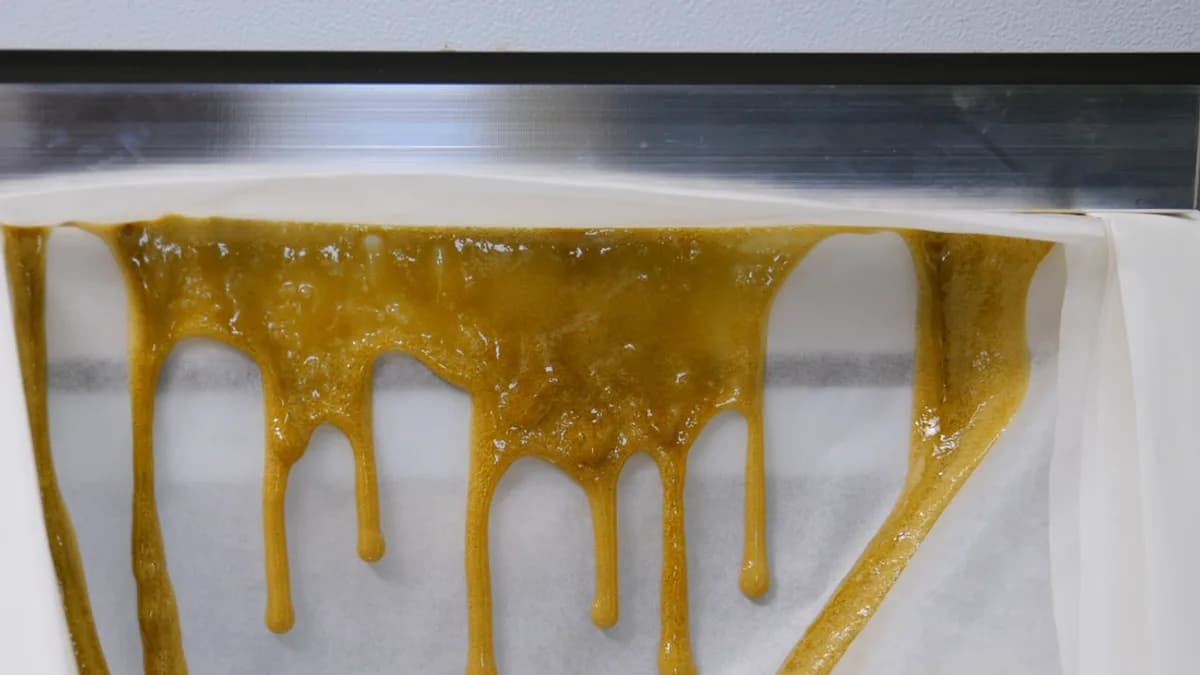
Don't confuse live rosin with live resin, which starts from the same kind of frozen plant but uses solvents such as butane.
How Strong Is One Live Rosin Gummy?
We label each Pure Roots gummy at 10 mg of Delta-9 THC. That makes 100 mg in a 10-count bag, 200 mg in a 20-count bag and 40 mg in the 4-count sampler.
For many first-timers, a full 10 mg is more than they need. New York's cannabis regulator warns that 10 mg may be too much for some people and says newer consumers may need to start with 2.5 mg (New York Office of Cannabis Management), which is a quarter of one of our gummies. A half is about 5 mg. Cutting by hand isn't exact, but it gets you close, and our Delta-9 gummy dosage chart walks through each step.
| Dose | Of one Pure Roots gummy | Where people usually start |
|---|---|---|
| 2.5 mg | a quarter | First time with edibles, or low tolerance |
| 5 mg | a half | A common second step |
| 10 mg | one gummy | Adults who already know how edibles affect them |
| 15 mg and up | one and a half or more | Experienced users only; higher doses raise the chance of unwanted effects |
These gummies are for adults 21 and over. Don't drive after taking one, and store them away from children and pets, since they look like candy.
How Long Does a Live Rosin Gummy Take to Kick In?
Effects from an edible usually start within 30 minutes to 2 hours (CDC, 2024), and it can take up to 4 hours to feel the full effect (California Department of Cannabis Control, 2024). Effects usually last about 6 to 12 hours (Minnesota Office of Cannabis Management, 2026). Food, metabolism and tolerance all change the timing. Our post on how long a gummy takes to kick in maps the full timeline, from the first hour to the next morning.
The classic first-timer mistake is taking a second gummy at 45 minutes because nothing seems to be happening. Give the first one the full 2 hours. Pick a time when your evening is free and you have nowhere to drive.
Edibles feel different from smoking because the THC passes through your stomach and liver first, so if you're used to flower, start lower than you think. A gummy is also a discreet way to take Delta-9: a labeled 10 mg dose, with no smoke and nothing to light.
Do Live Rosin Gummies Show Up on a Drug Test?
Yes, they can. Hemp-derived Delta-9 is THC, and a standard drug test can't tell it apart from THC from marijuana. A 2020 position statement from the American College of Medical Toxicology says a positive result doesn't show the source of the THC. It adds that hemp products under 0.3% THC can still cause a positive test, depending on how much THC you take in (Journal of Medical Toxicology, 2020). For cutoffs, test types and detection windows, see our full guide on whether Delta-9 gummies show up on a drug test.
Why Does Organic Hemp Matter for Live Rosin?
Pressing doesn't clean the plant, so whatever was on the flower, such as pesticide residues, can concentrate into the rosin. That's why the starting hemp matters, and why the contaminant panels on a lab report are worth reading. Under USDA organic rules, a field must go 3 years with no prohibited substances applied before harvest (7 CFR 205.202). Synthetic substances are banned unless they're on an approved list (7 CFR 205.105).
Pure Roots gummies are made with USDA Certified Organic live rosin. You can look up our farm in the USDA Organic Integrity Database (NOP ID 5561006795).
Are Hemp-Derived Delta-9 Gummies Legal?
They still are. Under the 2018 Farm Bill, hemp is legal at up to 0.3% Delta-9 THC by dry weight, and our gummies are made to that standard. That holds until December 11, 2026. On that date, a federal change limits hemp products to 0.4 mg of total THC per container, far less than one 10 mg gummy (Congressional Research Service, 2026). States add their own rules on top, so check the product page for where we ship.
The change comes from P.L. 119-37 (§781), the FY2026 agriculture spending law, which rewrote the federal definition of hemp. Congress has already pushed it back once: P.L. 119-103, passed in September 2026, moved the date for products like ours to December 11. It can move again. If you want to keep buying hemp gummies after December 11, sign the petition asking Congress for a two-year extension.
What Should You Check Before You Buy?
Not every bag that says "live rosin" is made the same way, so start with the lab report. A 2023 study tested 53 hemp Delta-9 products and found that, on average, they held 82.4% of the THC their labels claimed (Journal of Cannabis Research, 2023). That's why the milligrams on a lab report matter more than the claims on a bag. Use this table as a quick check.
| What to check | Quality signal | Red flag |
|---|---|---|
| Extract | Solventless live rosin | Unspecified, or distillate only |
| Hemp source | USDA Certified Organic farm with a NOP ID you can check | "Organic" with no certifier named |
| Lab testing | Public COA with potency and contaminant panels | No COA, or a generic report |
| THC per gummy | Measured mg per gummy on the COA, close to the label | Vague or missing potency |
| Onset | Clear dosing guidance | Promises of instant effects |
Pure Roots Live Rosin Gummies at a Glance
Every gummy in the line carries a 10 mg Delta-9 label. Here's how the flavors, packs and prices compare.
| Flavor | Strain label | Count | Delta-9 per pack | Price |
|---|---|---|---|---|
| Tangerine Dream | Sativa | 20 | 200 mg | $39.95 |
| Strawberry Frost | Indica | 20 | 200 mg | $39.95 |
| Pineapple Paradise | Hybrid | 20 | 200 mg | $39.95 |
| Blueberry Blast | Indica | 20 | 200 mg | $39.95 |
| Watermelon | Hybrid | 10 | 100 mg | $19.95 |
| Pink Lemonade | Hybrid | 10 | 100 mg | $19.95 |
| Blue Raspberry | Hybrid | 10 | 100 mg | $19.95 |
| Gummies Sample Pack | Mixed | 4 | 40 mg | $10.95 |
Our best sellers are the 20-count bags: Tangerine Dream, Strawberry Frost, Pineapple Paradise and Blueberry Blast.
New to edibles? The Gummies Sample Pack is four 10 mg gummies for $10.95, or you can browse all live rosin Delta-9 gummies. Shipping is free over $100, and we can't ship to California, Colorado, Oregon, Washington State or Washington, DC. Our gummies are for adults 21+: start with a quarter to half, don't drive after one, and keep them away from children and pets.
Frequently Asked Questions
What makes live rosin gummies different?
They're made with live rosin instead of distillate. Because live rosin is pressed instead of refined, it keeps more of the plant's terpenes. Pure Roots gummies are made with USDA Certified Organic live rosin. Both kinds are mostly Delta-9 THC, so compare the milligrams per gummy on each lab report.
Are live rosin gummies stronger than regular edibles?
Not by THC content. Live rosin and distillate gummies are both mostly Delta-9 THC, so strength comes down to the milligrams in each piece, which the lab report shows. Ours are labeled 10 mg per gummy. Live rosin brings more of the plant's own flavor through than distillate does.
How long do live rosin gummies take to kick in?
Most people feel an edible within 30 minutes to 2 hours, and the full effect can take up to 4 hours. Wait the full 2 hours before taking more.
What dose should a beginner start with?
Start with 2.5 to 5 mg, a quarter to half of one 10 mg Pure Roots gummy, and wait 2 hours before taking more. Gummies are for adults 21+ only, and don't drive after taking one.
Will a live rosin gummy show up on a drug test?
It can. A standard drug test looks for THC and can't show whether it came from hemp or marijuana. If you're tested for work, sport or the military, don't take THC gummies.
What is the difference between live rosin and live resin?
Live rosin is solventless: it's pressed from fresh-frozen hemp with ice water, heat and pressure. Live resin starts from the same kind of frozen plant but is extracted with hydrocarbon solvents such as butane. Both aim to keep the plant's terpenes, so the extraction method is what sets them apart.
How should I store Pure Roots live rosin gummies?
Keep the bag sealed in a cool, dry place, away from heat and direct sun, since heat can soften gummies and make them stick together. Store them out of reach of children and pets, and check the bag for the best-by date.
Sources
- Congressional Research Service, "Changes to the Statutory Definition of Hemp and Implications for Agricultural Policy" (IF13136), updated September 28, 2026. congress.gov (retrieved 2026-10-04)
- New York State Office of Cannabis Management, "Know Your Edibles" consumer card. cannabis.ny.gov (retrieved 2026-10-07)
- Centers for Disease Control and Prevention, "Cannabis and Poisoning," February 15, 2024. cdc.gov (retrieved 2026-10-07)
- California Department of Cannabis Control, cannabis consumer information brochure (SB 540), revised December 2024. cdn.cannabis.ca.gov (retrieved 2026-10-07)
- Minnesota Office of Cannabis Management, "Guide to Safer Cannabis Use in Minnesota," version 1.0, June 16, 2026. mn.gov (retrieved 2026-10-07)
- American College of Medical Toxicology, "ACMT Position Statement: Interpretation of Urine for Tetrahydrocannabinol Metabolites," Journal of Medical Toxicology, 2020. pmc.ncbi.nlm.nih.gov (retrieved 2026-10-04)
- Journal of Cannabis Research, "Potency and safety analysis of hemp delta-9 products: the hemp vs. cannabis demarcation problem," 2023. pmc.ncbi.nlm.nih.gov (retrieved 2026-10-04)
- Code of Federal Regulations, 7 CFR 205.202, "Land requirements," 2024 edition (U.S. Government Publishing Office). govinfo.gov (retrieved 2026-10-04)
- Code of Federal Regulations, 7 CFR 205.105, "Allowed and prohibited substances, methods, and ingredients in organic production and handling," 2024 edition (U.S. Government Publishing Office). govinfo.gov (retrieved 2026-10-04)
- USDA Agricultural Marketing Service, Organic Integrity Database, Pure Roots Botanicals operation profile (NOP ID 5561006795). organic.ams.usda.gov (retrieved 2026-10-04)
Found this useful? Share it.
Written by
Ben Cerullo
Founder & Master Grower · Pure Roots Botanicals
Ben Cerullo founded Pure Roots Botanicals after years in organic agriculture, driven by a belief that hemp consumers deserve federal-grade transparency. He manages USDA Certified Organic operations at the North Carolina farm (NOP ID: 5561006795) and writes on hemp education, organic certification, and consumer safety.